
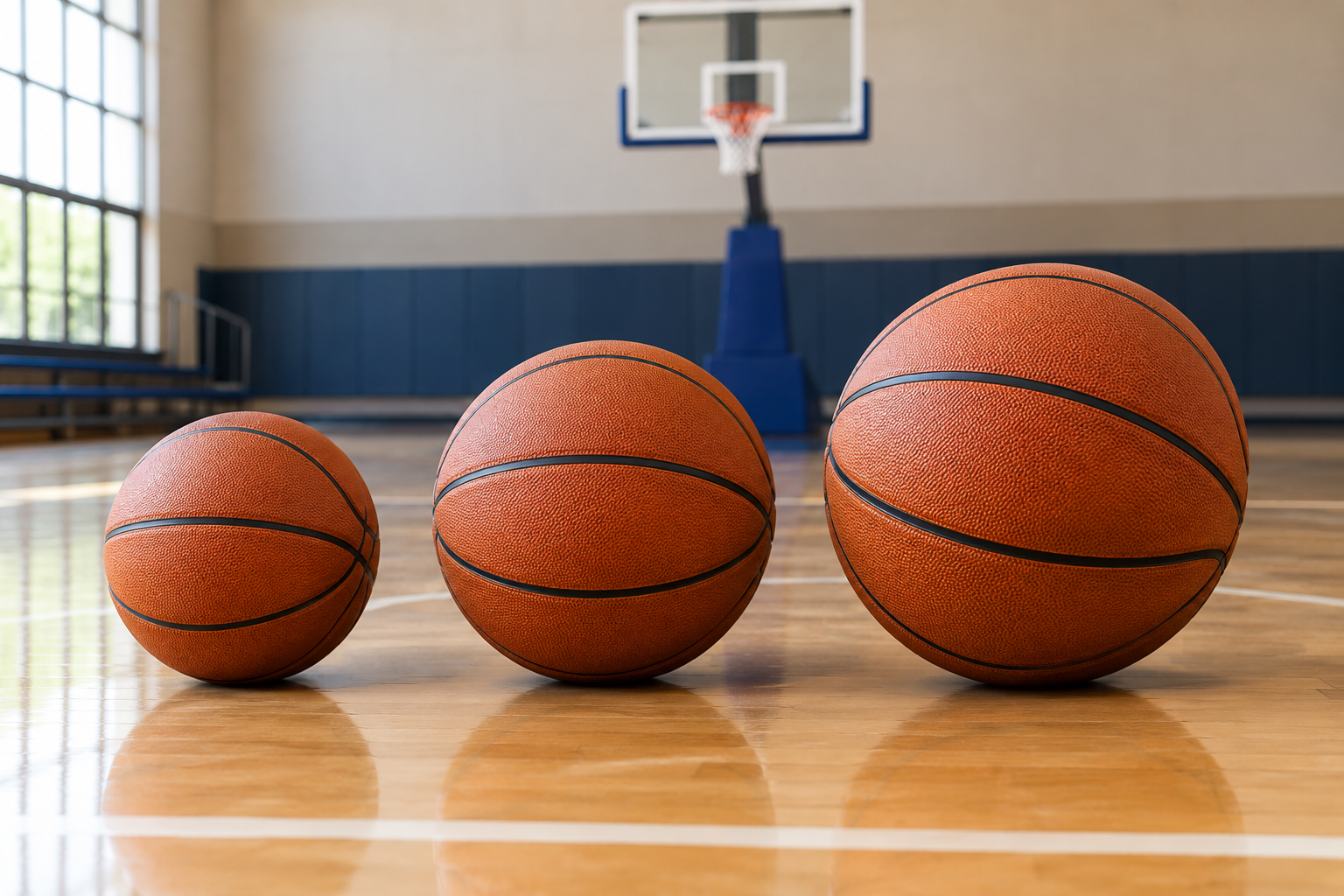
Choosing a basketball sounds simple until you start looking at size 5, size 6, and size 7 balls. The right choice depends on who is playing, how old they are, and whether the ball is being used for casual games or organised competition. For most adults, the biggest difference to know is that men’s basketball commonly uses a size 7 ball, while women’s basketball commonly uses a size 6.
The difference might seem small on paper, but even an inch of circumference and a little extra weight can change how a ball feels in your hands. A basketball that fits comfortably can make dribbling, passing, and shooting feel much more natural.
What Is the Standard Basketball Size for Men and Women?
There isn’t one universal basketball size for every player. Basketballs are made in several sizes so that children, teenagers, and adults can use equipment that suits their age and level of play.
For adult competition, the two sizes most people need to know are:
- Size 7: commonly used in men’s basketball
- Size 6: commonly used in women’s basketball
- Size 5: commonly used for younger players
A standard size 7 basketball has a circumference of around 29.5 inches and weighs roughly 22 ounces. A size 6 basketball is slightly smaller, with a circumference of about 28.5 inches and a weight of around 20 ounces.
Those measurements can vary slightly depending on the manufacturer and the exact competition rules, but the general difference remains the same.
What Size Basketball Do Men Use?
For adult men’s basketball, the size 7 basketball is the standard choice in many organised competitions.
It has a circumference of approximately 29.5 inches and weighs around 22 ounces. The larger size gives adult players a ball that requires a little more hand control when dribbling, passing, and shooting.
A size 7 ball is commonly associated with:
- Professional men’s basketball
- College men’s basketball
- Adult recreational leagues
- High school boys’ basketball in many competitions
- General adult practice and training
If you’re an adult man buying a basketball for regular practice, size 7 is usually the first size to consider. However, if you’re buying one for an organised league, checking that league’s equipment rules is still a good idea.
What Size Basketball Do Women Use?
The commonly used basketball size for adult women’s basketball is size 6.
This ball has a circumference of roughly 28.5 inches and weighs about 20 ounces. Compared with a size 7 basketball, it is slightly smaller and lighter, which changes the way it feels during everyday play.
Size 6 is widely used in women’s organised basketball and can also be a practical option for recreational players who prefer a slightly smaller ball.
The difference isn’t dramatic. Players still perform the same basic skills, including dribbling, passing, shooting, rebounding, and ball handling. The main change is how the ball fits in the player’s hands and how much force is needed to control it.
Basketball Size for Men vs Women
The easiest way to see the difference is to put the common specifications side by side.
| Feature | Men’s Basketball | Women’s Basketball |
|---|---|---|
| Common size | Size 7 | Size 6 |
| Circumference | About 29.5 inches | About 28.5 inches |
| Weight | About 22 oz | About 20 oz |
| Typical use | Adult men’s basketball | Adult women’s basketball |
| Overall feel | Larger and heavier | Slightly smaller and lighter |
The difference in size may not look huge, but players can notice it quickly when switching between the two. A size 6 ball can feel easier to control for some players, while a size 7 basketball provides the dimensions expected in many men’s competitions.
Why Are Men’s and Women’s Basketball Sizes Different?
Basketball uses different ball specifications for different groups because players don’t all have the same physical characteristics or equipment requirements.
A slightly smaller and lighter basketball can be easier to grip and control. This matters when a player is dribbling at speed, making quick passes, or shooting from different positions on the court.
It doesn’t mean that one basketball size is automatically easier for everyone. Players become accustomed to the ball they regularly use, and technique has a major role in how comfortable someone feels.
For competitive players, the most important point is to practise with the ball size used in their actual games. That way, the weight, grip, bounce, and overall feel are familiar when it matters.
Basketball Size by Age
Age is another important factor when choosing a basketball. Young players generally need smaller balls because a full-size basketball can be difficult for smaller hands to control.
Size 5 Basketball
A size 5 basketball is commonly used by younger children and youth players.
Its smaller size makes it easier for beginners to hold, dribble, pass, and shoot. It can be a good starting point for children who are still developing basic basketball skills.
Size 6 Basketball
Size 6 sits between the smaller youth ball and the full-size men’s ball.
It is commonly used in women’s basketball and is also suitable for certain youth age groups, depending on the competition. For young players moving towards a larger basketball, size 6 can provide a useful transition.
Size 7 Basketball
Size 7 is the larger standard basketball commonly used for adult men’s basketball.
Older teenagers may also use this size depending on their league and competition rules. Players who are preparing for adult basketball can eventually transition to size 7 as their hands and skills develop.
Basketball Size Chart for Men, Women, and Kids
Here’s a quick reference for the three common basketball sizes:
| Basketball Size | Approx. Circumference | Approx. Weight | Common Use |
|---|---|---|---|
| Size 5 | 27.5 inches | 17 oz | Younger children |
| Size 6 | 28.5 inches | 20 oz | Women and some youth players |
| Size 7 | 29.5 inches | 22 oz | Adult men and older players |
These are general measurements rather than a replacement for specific league rules. If you’re buying a basketball for official competition, always check the requirements for that competition.
Does Basketball Size Affect Your Game?
The ball in your hands affects more than just your grip.
A larger and heavier ball can change the amount of effort needed for certain movements. Beginners may notice this particularly when trying to shoot the ball towards the basket.
Basketball size can affect:
- Dribbling: A player’s hand needs to control the ball through each bounce.
- Passing: Ball weight can influence how much force is needed.
- Shooting: Players need to adjust their technique and power to the ball.
- Grip: Smaller hands may find a smaller basketball easier to control.
- Ball handling: Size can affect how quickly a player can move the ball between their hands.
- Confidence: A ball that feels manageable can make practice more enjoyable for beginners.
The best way to become comfortable with a particular size is simply to practise with it regularly.
Can Women Use a Size 7 Basketball?
Yes. Women can use a size 7 basketball for practice, recreational games, strength and handling drills, or simply because that is the ball available.
However, women’s competitive basketball generally has its own specified ball size. If you’re preparing for a particular league, using the required size during practice makes sense because it allows you to become familiar with the same equipment you’ll use during games.
Someone who normally plays with size 6 may notice that a size 7 ball feels slightly larger and heavier. That difference can make certain ball-handling exercises feel different.
Can Men Use a Size 6 Basketball?
Men can also use a size 6 basketball, especially for casual games, youth coaching, shooting drills, or ball-handling practice.
A smaller ball can feel easier to control, particularly during certain drills. However, adult men’s competitions that require a size 7 basketball will naturally require players to practise with that size if they want their training to closely match game conditions.
For casual use, comfort is more flexible. For competition, the rules should determine the choice.
Indoor vs Outdoor Basketball: Does Size Change?
Playing indoors or outdoors doesn’t automatically change the required basketball size. The player’s age group, gender category, and competition rules are generally more important when determining size.
What does change is the construction of the ball.
Indoor basketballs are often designed with materials that provide a softer feel and good grip on indoor courts. Outdoor basketballs need to handle rougher surfaces, so durability becomes especially important.
You can find size 5, size 6, and size 7 basketballs designed for different playing environments. So when shopping, look at both the basketball size and the type of court where you’ll use it.
How to Choose the Right Basketball Size
If you’re unsure which basketball to buy, start with these questions:
- Who will use the ball? Consider the player’s age and whether it’s for men’s or women’s competition.
- Where will it be used? Decide whether you mainly play indoors, outdoors, or both.
- Is it for competition? Check the rules of the league before purchasing.
- Does it feel comfortable? For recreational players, grip and control matter.
- What size do you normally practise with? Consistency can make skill development easier.
If you’re buying a ball for a child, don’t automatically choose the biggest one available. A smaller ball can make learning basic skills less frustrating and more enjoyable.
Common Basketball Size Mistakes to Avoid
One of the most common mistakes is assuming that every basketball is the same size. They’re not.
Other mistakes include:
- Buying a size 7 ball for a young child who is still learning basic skills.
- Ignoring competition rules when purchasing a game ball.
- Choosing a basketball based only on its appearance.
- Confusing the basketball’s diameter with its circumference.
- Buying an indoor basketball for frequent outdoor use without considering durability.
- Choosing a ball that feels too heavy or difficult to control.
Taking a minute to check the specifications can save you from buying the wrong ball.
Basketball Size for Recreational Players
Recreational players have more freedom than competitive players when choosing a basketball.
If you’re playing casually with friends, the most important factors may be comfort, grip, durability, and personal preference. A player who finds a size 6 basketball easier to control may enjoy using it even if they’re not playing in a women’s league.
Likewise, someone who wants to prepare for adult men’s competition will probably want to spend most of their practice time with a size 7 basketball.
For beginners, choosing a manageable ball can be particularly helpful. As skills improve, moving to the size required for competitive play becomes more natural.
What Basketball Size Should You Use?
For most players, the choice is fairly straightforward. Adult men commonly use a size 7 basketball, while adult women commonly use a size 6 basketball. Younger players generally use size 5 or size 6 depending on their age and the rules of their league.
If you’re playing organised basketball, the competition’s official equipment requirements should always take priority. For casual play, comfort and control can give you more flexibility when deciding which basketball size feels right.