
Fresh paint can completely change the look of a room, a piece of furniture, or an outdoor surface. The difficult part often comes after the painting is finished. The wall may look dry, but is it ready for another coat? Can you move the furniture back? Is it safe to walk on a painted floor or close a freshly painted cabinet door?
The answer depends on more than the number of hours that have passed. Paint type, surface material, temperature, humidity, ventilation, and coat thickness all affect how quickly paint dries.
Water-based wall paint may feel dry within an hour, while oil-based enamel can remain soft for much longer. A painted surface can also feel dry to the touch without being fully cured, which means it may still scratch, dent, peel, or stick to nearby objects.
Understanding these differences helps you avoid common painting problems and gives the finish enough time to become smooth, strong, and durable.
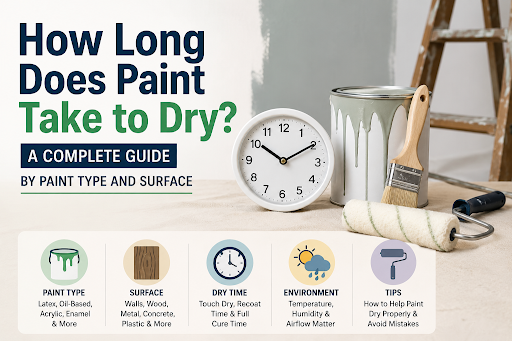
How Long Does Paint Take to Dry?
Most water-based paints become dry to the touch in about 30 minutes to two hours. Oil-based paints usually need six to eight hours before the surface feels dry. However, drying is only the first stage.
Paint may need several hours before another coat can be applied and anywhere from a few days to several weeks to cure completely.
Here is a general comparison:
| Paint type | Dry to the touch | Typical recoat time | Approximate cure time |
| Latex paint | About 1 hour | 2–4 hours | 2–4 weeks |
| Acrylic paint | 30–60 minutes | 2–4 hours | 1–3 weeks |
| Oil-based paint | 6–8 hours | Around 24 hours | Up to 30 days |
| Spray paint | 20–60 minutes | 1–2 hours | 1–7 days |
| Chalk paint | 30–60 minutes | 1–2 hours | 1–3 weeks |
| Enamel paint | 1–8 hours | 6–24 hours | Up to 30 days |
| Primer | 30 minutes–4 hours | Depends on the formula | Several days |
These times are useful estimates rather than fixed rules. Paint formulas vary, so the instructions printed on the container should always be your main guide.
What does “dry to the touch” mean?
Dry to the touch means the outer surface no longer feels wet and paint does not transfer easily to your finger. It does not mean the entire layer has hardened.
The paint underneath may still be soft, especially if the coat was applied heavily. Pressing furniture against the wall, adding tape, closing painted doors, or cleaning the surface too soon can still leave marks.
How long before you can touch fresh paint?
Light contact is normally safe once the paint reaches its stated touch-dry time. Even then, avoid rubbing, pressing, scraping, or leaning anything against it.
A wall that feels dry after an hour may still be vulnerable to fingerprints, dents, and scuff marks for the rest of the day.
Paint Dry Time vs. Cure Time: What’s the Difference?
Dry time and cure time are often treated as if they mean the same thing, but they describe different stages.
- Dry time is the period needed for the surface to stop feeling wet.
- Recoat time is the minimum wait before another layer can be applied safely.
- Cure time is the time required for the paint to reach its full hardness and durability.
Think about a freshly painted cabinet. The door may feel dry within a few hours, but closing it too early can cause it to stick to the frame. The same paint may need several weeks before it is hard enough to handle daily cleaning and repeated use.
Why cure time matters
Paint that has not fully cured can be damaged surprisingly easily. Using the surface too soon may cause:
- Scratches and dents
- Sticky doors, drawers, or shelves
- Peeling around painter’s tape
- Marks from furniture and decorations
- Footprints on painted floors
- Wrinkled or uneven finishes
- Reduced resistance to moisture and cleaning
Giving paint enough time to cure is especially important on cabinets, furniture, doors, trim, floors, and other high-contact surfaces.
How Long Should Paint Dry Between Coats?
Latex and acrylic paints usually need two to four hours between coats. Oil-based paint often requires around 24 hours.
The exact waiting period depends on the paint formula and the conditions in the room. A thin coat in a warm, ventilated space may be ready on schedule, while a thick coat in a cold or humid room may need much longer.
Applying the next coat before the first one is ready does not save time. It can trap moisture, pull up the lower layer, and leave the paint soft for days.
What happens if you apply a second coat too soon?
Recoating too early can create several visible problems:
- The roller pulls paint away from the wall.
- Brush marks become more noticeable.
- The surface develops bubbles or wrinkles.
- The color looks patchy or uneven.
- The finish remains tacky.
- Drying takes longer overall.
- Paint may peel or lose adhesion later.
A second coat should improve coverage, not disturb the layer underneath.
How to tell when paint is ready for another coat
Check a small, less noticeable area before continuing. The paint should feel firm and dry rather than cool, soft, or sticky.
A cool feeling can be a sign that moisture is still evaporating. When there is any doubt, give the surface more time and follow the recoat instructions on the label.
Drying Times for Different Types of Paint
The ingredients in paint have a major effect on drying speed. Water-based products generally dry faster, while paints containing oils and stronger resins need more time.
How long does latex paint take to dry?
Latex paint usually becomes dry to the touch in about one hour. A second coat can often be applied after two to four hours.
Because it dries relatively quickly and cleans up with water, latex paint is commonly used on interior walls and ceilings. It still needs time to cure, though. Regular cleaning or heavy contact should be avoided for at least a couple of weeks.
Cool temperatures, poor airflow, and high humidity can make latex paint take longer to dry.
How long does acrylic paint take to dry?
Acrylic paint may feel dry within 30 to 60 minutes. Many household acrylic paints can be recoated after two to four hours.
The drying time depends on the thickness of the coat and the type of product. Decorative acrylic paint used for crafts may behave differently from acrylic wall paint or exterior acrylic coatings.
Although acrylic paint dries quickly on the surface, it should still be handled carefully until it has cured.
How long does oil-based paint take to dry?
Oil-based paint usually takes six to eight hours to become dry to the touch. You may need to wait about 24 hours before adding another coat.
Its slow drying time can be inconvenient, but it allows the paint to level out and form a smooth, durable finish. That is why oil-based products are often used on trim, doors, cabinets, furniture, and metal.
Full curing can take several weeks. During that time, the finish may still be vulnerable to pressure marks and sticking.
How long does spray paint take to dry?
Spray paint often feels dry within 20 to 60 minutes because it is applied in thin layers. Some products can be recoated within an hour, while others have very specific recoat windows.
Heavy spray coats take much longer to dry and are more likely to run, wrinkle, or stay tacky.
For a cleaner finish:
- Apply several light coats rather than one heavy layer.
- Keep the can at the recommended distance.
- Move the can steadily across the surface.
- Allow the suggested waiting time between coats.
- Avoid handling the object as soon as it feels dry.
Cold weather and poor ventilation can significantly increase spray paint drying time.
How long does chalk paint take to dry?
Chalk paint often becomes touch-dry in 30 to 60 minutes. A second coat can usually be applied after one to two hours, although some brands recommend a longer wait.
The paint itself may dry quickly, but waxes and protective topcoats need additional time. A waxed table or cabinet should be used gently until the protective layer has hardened.
Placing heavy objects on freshly finished chalk-painted furniture can leave marks even when the surface no longer feels wet.
How long does enamel paint take to dry?
Enamel paint drying time varies because enamel products can be water-based or oil-based.
Water-based enamel may become touch-dry within one or two hours. Oil-based enamel may need six to eight hours or longer. Recoat times can range from a few hours to a full day.
Enamel is often chosen for cabinets, doors, furniture, trim, and metal because it creates a hard finish. That hardness develops during curing, not immediately after the surface dries.
How long does primer take to dry before painting?
Some water-based primers can be painted over after 30 to 60 minutes. Oil-based, shellac-based, stain-blocking, and bonding primers may need several hours.
Primer should feel dry and firm before the topcoat is applied. Painting over wet primer may cause poor adhesion, uneven color, or stains bleeding through the finish.
Porous materials such as bare wood or drywall can also absorb primer differently, so certain areas may need extra time.
How Long Does Paint Take to Dry on Different Surfaces?
The surface underneath the paint can change the drying process. Porous materials absorb moisture, while smooth surfaces allow paint to sit on top. Preparation, primer, and previous coatings also play a role.
How long does paint take to dry on walls?
Interior latex wall paint often follows this general timeline:
- Dry to the touch in about one hour
- Ready for another coat in two to four hours
- Safe for gentle use after 24 to 48 hours
- Fully cured in roughly two to four weeks
Walls in bathrooms, kitchens, basements, and other humid spaces may need longer. Thick coats and poor ventilation also slow the process.
Even after the wall feels dry, avoid pushing furniture against it or scrubbing it immediately.
How long does paint take to dry on wood?
Paint drying time on wood depends on whether the surface is bare, sealed, stained, or previously painted.
Bare wood can absorb paint unevenly. A suitable primer helps create a more consistent surface and prevents the first coat from soaking in too quickly.
Previously painted or sealed wood may allow the coating to sit on top longer. This can make the paint feel dry while it remains soft underneath.
Wooden doors, shelves, tables, cabinets, and furniture should be given extra curing time because they receive regular contact and pressure.
How long does paint take to dry on metal?
Paint can become touch-dry quickly on metal, but proper bonding may take longer. Cold metal, damp conditions, rust, grease, and dirt can interfere with adhesion.
Before painting metal:
- Remove loose rust.
- Clean away oil and dirt.
- Make sure the surface is completely dry.
- Use a primer made for metal.
- Apply thin coats.
Avoid handling painted metal too early. Fingerprints, scratches, and pressure marks can appear even when the surface feels dry.
How long does paint take to dry on concrete?
Concrete is porous and can hold moisture below the surface. That moisture may slow paint drying or prevent the coating from sticking properly.
Concrete floors, patios, basement walls, and masonry surfaces often require specialized paint. These coatings may have longer recoat and cure times than ordinary wall paint.
Newly poured concrete also needs to cure before it is painted. Applying paint while moisture is still leaving the concrete can lead to bubbling, peeling, or discoloration.
How long does paint take to dry on plastic?
Paint may appear to dry quickly on plastic, but adhesion is often the bigger concern.
Smooth plastic does not give ordinary paint much to grip. A plastic-compatible primer and paint can reduce scratching and peeling. Light sanding may also be recommended for certain surfaces.
Even when painted plastic feels dry, avoid bending, stacking, or handling it roughly until the coating has cured.
How long does cabinet paint take to dry?
Cabinet paint may become touch-dry within a few hours, but cabinet doors and drawers should not be put back into heavy use immediately.
A practical approach is to:
- Follow the full recoat time before adding another layer.
- Wait at least 24 to 48 hours before careful handling.
- Avoid closing doors tightly if the edges are still soft.
- Keep shelves lightly loaded during the first few days.
- Delay aggressive cleaning until the finish has cured.
Depending on the paint, full hardness may take several weeks.
How long does floor paint take to dry?
Floor paint needs more time because it must handle foot traffic, furniture, shoes, pets, and sometimes vehicles.
Light foot traffic may be allowed after one to three days, but rugs and heavy furniture usually need to wait longer. Garage floor coatings and epoxies may have their own timelines.
Walking on floor paint too early can leave footprints, dents, dull patches, or permanent texture marks.
How Temperature, Humidity, and Airflow Affect Paint Drying Time
A paint label may provide a drying time, but that estimate is usually based on suitable conditions. Temperature, humidity, and ventilation can change the result.
Does paint dry faster in heat or cold?
Paint generally dries faster in moderate warmth than in cold conditions. Warm air helps water or solvents evaporate.
Excessive heat is not always helpful. It can dry the outer surface too quickly while leaving the paint underneath soft. Direct sunlight can also cause lap marks, bubbling, or uneven drying.
Cold temperatures slow evaporation and may affect adhesion. Some paints should not be applied below a specific temperature, so always check the label.
How humidity affects paint drying time
High humidity slows water-based paint because the air already contains a large amount of moisture. Water in the paint cannot evaporate as easily.
In humid conditions, paint may:
- Stay sticky for longer
- Need more time between coats
- Develop an uneven sheen
- Sag on vertical surfaces
- Take longer to cure
Low to moderate humidity usually creates better painting conditions.
Does a fan help paint dry faster?
A fan can help by improving airflow and moving moisture away from the painted surface. It is most effective when used gently.
Avoid pointing a powerful fan directly at one section of wet paint. Strong airflow can cause uneven drying and may blow dust, hair, or debris onto the finish.
A ceiling fan on a low setting or a portable fan circulating air through the room is often a better option.
Should you open windows while paint dries?
Opening windows can improve ventilation when the outdoor air is mild and dry. It also helps remove odors and moisture from the room.
Keep windows closed when it is raining, extremely humid, very cold, or dusty outside. In those conditions, open windows may slow drying or contaminate the surface.
What is the best temperature for paint to dry?
Many interior paints perform well at comfortable room temperatures, often somewhere between 50°F and 85°F. The ideal range varies by product.
Try to keep the temperature steady while the paint dries. Sudden drops overnight can increase condensation and extend the drying time.
Interior vs. Exterior Paint: Which Takes Longer to Dry?
Interior paint dries in a relatively controlled setting. Exterior paint must deal with sunlight, wind, humidity, dew, temperature changes, and rain.
Warm outdoor air may make exterior paint feel dry quickly, but that does not always mean it is ready for bad weather. The coating still needs time to bond and form a protective film.
How long should exterior paint dry before rain?
Some modern exterior paints can resist light rain after only a few hours. Others may need 24 hours or longer.
Check the product’s rain-ready time rather than relying only on its touch-dry time. Rain that arrives too soon can cause streaks, bubbling, spotting, or paint wash-off.
Morning dew can create similar problems, so the forecast should be checked for both rain and overnight moisture.
Can you paint when it’s raining?
Indoor painting may be possible on a rainy day when the room is warm, ventilated, and not overly humid.
Exterior painting should normally be postponed. Damp siding, wood, masonry, or metal can prevent proper adhesion, while rain may damage the uncured coating.
Does the Application Method Affect Dry Time?
Paint applied with a brush, roller, or sprayer can dry at different speeds because each method leaves a different amount of paint on the surface.
Brush, roller, or spray
Brushes tend to leave thicker paint around corners, edges, grooves, and detailed trim. These areas may remain soft after the flatter sections have dried.
Rollers create fairly even coverage, but an overloaded roller can deposit a thick coat that takes longer to dry.
Sprayers usually apply thinner layers, which can dry faster. However, holding the sprayer too close can create heavy patches and runs.
In most cases, two thin coats dry more evenly and produce a better finish than one thick coat.
Flat, satin, and gloss paint drying times
Flat paint often appears to dry quickly because it has little shine. Satin, semi-gloss, and gloss finishes may stay tacky longer, particularly when they contain higher levels of resin.
Glossy paint also makes imperfections easier to see. Giving each layer enough drying time helps reduce brush marks and uneven texture.
How to Make Paint Dry Faster Without Ruining the Finish
Rushing paint with extreme heat can create more problems than it solves. The safest approach is to improve the conditions around the surface.
To help paint dry properly:
- Apply thin, even coats.
- Keep the room within the recommended temperature range.
- Use a dehumidifier in damp spaces.
- Improve airflow with open doors or a gently running fan.
- Allow extra time in bathrooms, kitchens, and basements.
- Clean and dry the surface before painting.
- Follow the stated recoat time.
- Use a paint designed for the material.
- Avoid painting immediately before a temperature drop.
- Do not place furniture or decorations against fresh paint.
Good preparation often shortens the overall project because it prevents sticky areas, peeling, and the need for repairs.
Can you speed up paint drying with a hair dryer?
A hair dryer may help with a very small craft project when it is used on a low setting and kept at a safe distance.
It is not a practical solution for walls, floors, cabinets, or large furniture. Concentrated heat can cause the surface to dry unevenly, creating bubbles, cracks, wrinkles, or a soft layer underneath.
Steady room temperature and gentle airflow are safer.
Why Is My Paint Still Sticky After Several Days?
Paint that remains sticky may not have had the right conditions to dry and cure.
Common causes include:
- Applying the paint too thickly
- Adding a second coat too soon
- Painting in high humidity
- Keeping the room too cold
- Using the wrong paint for the surface
- Painting over grease, wax, or dirt
- Poor ventilation
- Using old or poorly mixed paint
- Combining incompatible primers and topcoats
Oil-based products naturally take longer to harden, so some softness during the early curing period may be normal.
What to do about sticky paint
Start by giving the surface more time. Improve ventilation, keep the room comfortably warm, and reduce humidity where possible.
Do not add another coat over sticky paint. Avoid pressing objects against it or trying to wash it.
When the paint remains soft beyond the expected cure period, the affected area may need to be lightly sanded, cleaned, primed, and repainted.
How Long Should Paint Dry Before Everyday Use?
The right waiting time depends on how much contact the surface will receive. Looking dry is not the same as being ready for normal use.
How long before you can put furniture back after painting?
Wait at least 24 to 48 hours before moving furniture close to freshly painted walls. Keep sofas, beds, shelves, and cabinets from pressing directly against the surface for several days.
Furniture can leave marks or stick to paint that has dried but not cured.
How soon can you sleep in a freshly painted room?
A room painted with water-based, low-odor paint may be usable sooner than one painted with an oil-based product.
Ventilate the space thoroughly and follow the safety guidance on the paint container. Extra care should be taken for children, pregnant people, older adults, pets, and anyone who is sensitive to fumes or odors.
The room should feel comfortable, have good airflow, and no longer have a strong paint smell before regular use.
How long should paint dry before applying tape?
Painter’s tape can pull away fresh paint if it is applied too soon or removed carelessly.
Waiting at least 24 hours is often safer, although longer may be needed for glossy finishes or humid rooms. Use tape labeled for delicate or freshly painted surfaces when possible.
How long should paint dry before hanging pictures?
Light decorations can often be hung after 24 to 48 hours. Heavy frames, wall-mounted shelves, and adhesive strips may require a longer wait.
Adhesive products can peel paint that has not cured, even when the wall feels dry.
How long should paint dry before cleaning the walls?
Avoid scrubbing freshly painted walls. Many washable paints need two to four weeks to reach full durability.
During the early curing period, gently remove dust with a soft, dry cloth. Strong cleaners and abrasive sponges can leave shiny patches or remove color.
How long should painted cabinets dry before use?
Cabinets can usually handle light use after a few days, but they should be treated gently.
Avoid slamming doors, stacking heavy items on shelves, or cleaning with strong products. Full hardness may take several weeks, particularly with enamel or oil-based paint.
How long should painted floors dry before walking on them?
Some floor paints allow light foot traffic after 24 to 72 hours. Heavy furniture, rugs, pets, shoes, and regular traffic may need to wait longer.
Always follow the coating manufacturer’s instructions, especially for porch paint, concrete paint, epoxy, or garage floor finishes.
A Room-by-Room Guide to Paint Drying Times
Different rooms create different drying conditions. Temperature, moisture, airflow, and daily use all matter.
Bedrooms and living rooms
Bedrooms and living rooms usually provide good conditions for latex wall paint. They are often easier to ventilate and have less moisture than kitchens or bathrooms.
The walls may be ready for a second coat within a few hours, but furniture should still be kept away from them for at least a day or two.
Kitchens and bathrooms
Steam, moisture, grease, and limited airflow can slow drying in kitchens and bathrooms.
Use an exhaust fan or open the door to improve ventilation. Give the paint extra time before exposing it to hot showers, cooking steam, splashes, or cleaning products.
Basements
Basements are often cooler and more humid than the rest of the home. These conditions can make paint stay tacky long after the estimated drying time.
A dehumidifier and gentle air circulation can make a noticeable difference. Make sure basement walls and concrete surfaces are not holding moisture before painting.
Cabinets, trim, and doors
Cabinets, trim, and doors are touched frequently and often painted with satin, semi-gloss, gloss, or enamel products.
These surfaces may feel dry within hours but remain easy to dent or scratch. Leave doors open where possible and avoid allowing painted edges to press tightly together during the first few days.
Garages, patios, and exterior surfaces
Garages, patios, and outdoor surfaces face temperature swings, dust, moisture, and heavy traffic.
Exterior and floor coatings should be given the full recommended cure time before rugs, furniture, tools, vehicles, or other heavy objects are placed on them. Waiting longer at this stage is much easier than repairing footprints, peeling paint, or pressure marks later.