
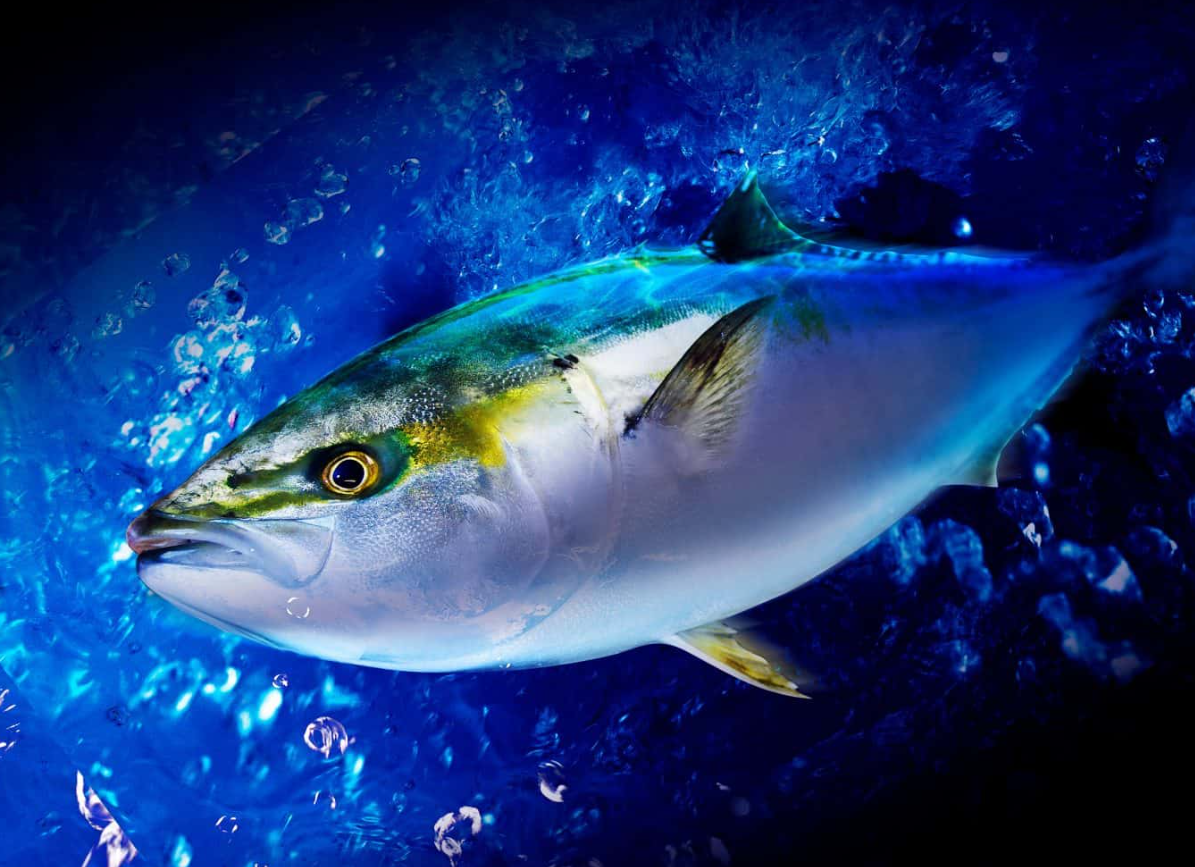
Amberjack is known for its firm texture, rich flavor, and popularity in grilled dishes, sushi, and offshore fishing communities. But because amberjack can grow quite large and feeds on other marine animals, one question comes up often: how much mercury does amberjack fish contain, and is it safe to eat regularly?
The answer isn’t as simple as calling amberjack either safe or unsafe. Amberjack fish mercury levels can vary considerably depending on the species, size of the fish, its age, diet, and where it was caught.
Mercury is also only one part of the picture. Amberjack can provide protein and other useful nutrients, but portion size, eating frequency, pregnancy, and the source of the fish can all affect whether it makes sense for your diet.
Amberjack Fish Mercury Levels: Is It Safe to Eat?
Amberjack can be safe to eat, but it is a fish worth consuming with some awareness of mercury exposure, particularly when you’re eating larger greater amberjack.
Nearly all fish contain at least small amounts of methylmercury. The FDA explains that larger fish that eat other fish and live for longer periods tend to accumulate more methylmercury than many smaller species.
That matters for amberjack because several species are active predators and can reach substantial sizes.
There also isn’t one mercury number that applies to every amberjack. Research has found major differences between fish collected from different regions. For example, one study of marine fish in Malaysia measured a greater amberjack sample at 0.106 mg/kg of mercury, while Gulf of Mexico data summarized by NOAA reported a mean mercury concentration of about 0.549 ppm for amberjack.
More recent research on wild Seriola amberjacks from the Canary Islands also found elevated mercury in many samples, showing how strongly location and individual fish characteristics can influence results.
So, rather than assuming all amberjack has a fixed mercury level, it is more useful to think about species, fish size, catch location, portion size, and how often you eat it.
Why Does Amberjack Fish Contain Mercury?
Mercury enters oceans, rivers, lakes, and other aquatic environments from both natural sources and human activity. In water and sediment, some mercury is converted into methylmercury, the form that commonly accumulates in seafood.
Fish don’t need to live in visibly polluted water to contain it. Methylmercury moves through the food chain.
How Mercury Builds Up in Fish
Small organisms absorb tiny amounts of methylmercury from their surroundings. Small fish then eat those organisms, and larger fish eat the smaller fish.
Over time, mercury can build up in the body of a predator. This process is one reason large, long-lived fish often attract more attention when people discuss mercury in fish.
The FDA notes that nearly all seafood contains traces of methylmercury, but concentrations aren’t the same across species.
Amberjack’s Place in the Food Chain
What do amberjack fish eat? Their diet can include smaller fish, squid, crustaceans, and other marine prey.
That predatory feeding behavior is important when discussing amberjack fish mercury, especially with greater amberjack.
A greater amberjack can become considerably larger than many small schooling fish. As the fish grows and continues feeding, mercury exposure can accumulate through its prey.
Fish size isn’t the only factor, though. NOAA notes that mercury concentrations in individual fish can also vary with age, diet, growth rate, metabolism, and other biological factors.
How Much Mercury Is in Amberjack Fish?
There is no reliable single figure that describes every amberjack sold in markets or caught recreationally.
Different studies have reported very different concentrations. This doesn’t necessarily mean one result is wrong. It shows why seafood mercury data should be interpreted in context.
The mercury concentration of an amberjack may be influenced by:
- Species
- Age
- Length and weight
- Diet
- Catch location
- Local environmental conditions
- How long the fish has been feeding in a particular food web
One older Gulf dataset reported an average of approximately 0.549 ppm mercury for amberjack, while other sampling has produced both lower and higher results.
This variation is also why it’s risky to take a mercury value from one amberjack study and assume it applies to every fish worldwide.
Greater Amberjack vs Smaller Amberjack Species
The name “amberjack” can refer to multiple fish within the Seriola group.
FDA seafood naming information recognizes several related fish, including:
- Greater amberjack, Seriola dumerili
- Lesser amberjack, Seriola fasciata
- Yellowtail, Seriola lalandi
- Buri, Seriola quinqueradiata
- Banded rudderfish, Seriola zonata
That distinction matters.
A large greater amberjack isn’t necessarily going to have the same mercury concentration as a smaller amberjack species. In general, a larger and older predatory fish has had more opportunity to accumulate methylmercury.
If you’re buying amberjack and mercury exposure is an important concern, knowing the exact species is more useful than simply seeing “amberjack” on the label.
How Often Can You Eat Amberjack?
There isn’t a universal amberjack serving schedule that works for everyone.
The current FDA and EPA seafood chart gives specific guidance for many fish, but amberjack isn’t specifically listed on the chart.
That makes local seafood advisories and the source of the fish especially useful.
For fish caught by family or friends, FDA and EPA recommend checking local fish advisories. If no advisory is available, their guidance for pregnant or breastfeeding people is to eat only one serving of that locally caught fish and avoid other fish during that week.
For the average healthy adult, an occasional amberjack meal is different from eating large portions several times every week.
A sensible seafood pattern also includes variety. Instead of relying heavily on one large predatory fish, rotate it with fish that are widely recognized as lower-mercury choices.
Portion Size Matters Too
Mercury exposure depends on more than how often you eat fish. The amount you eat at each meal matters as well.
For pregnancy and breastfeeding guidance, FDA uses 4 ounces as an adult serving.
Eating an unusually large amberjack steak exposes you to more mercury than eating a smaller portion of the same fish.
Ways to keep overall seafood exposure more balanced include:
- Keep portions reasonable.
- Avoid eating large predatory fish at every seafood meal.
- Rotate amberjack with lower-mercury fish.
- Check regional advisories for recreationally caught amberjack.
- Consider the size and species of the fish when that information is available.
Who Should Be More Careful About Eating Amberjack?
Mercury is a bigger concern for some groups than others because methylmercury can affect the developing brain and nervous system.
People who should pay particular attention to seafood choices include:
- People who are pregnant
- People who may become pregnant
- Breastfeeding mothers
- Infants and young children
FDA and EPA recommend that people who are pregnant or breastfeeding consume 8 to 12 ounces of seafood per week, but choose a variety of options that are lower in mercury.
This is an important distinction. The goal isn’t to eliminate fish altogether. Fish can provide valuable nutrients, but choosing the right species matters.
Is Amberjack Safe to Eat During Pregnancy?
Anyone considering amberjack during pregnancy should be more cautious than a healthy adult who eats it occasionally.
The FDA/EPA fish chart doesn’t currently give amberjack its own “Best Choice,” “Good Choice,” or “Choice to Avoid” classification.
Because amberjack mercury levels can vary and larger greater amberjack may contain meaningful amounts of mercury, it makes sense to favor fish that are specifically listed as lower-mercury choices during pregnancy.
Examples from the FDA “Best Choices” category include salmon, sardines, shrimp, tilapia, pollock, trout, sole, and several other species.
If amberjack is locally caught, check the relevant state or regional advisory before eating it.
Mercury Isn’t the Only Amberjack Safety Concern
Mercury gets most of the attention, but it isn’t the only food safety issue connected with amberjack.
Amberjack and Ciguatera Poisoning
Ciguatera poisoning and mercury exposure are two completely different problems.
Mercury is an environmental contaminant that accumulates through the food chain. Ciguatera comes from naturally occurring toxins that can move through tropical and subtropical reef food webs.
The FDA lists jacks and trevallies among fish groups associated with ciguatera poisoning, and its illness investigation records include confirmed cases involving greater amberjack.
In fact, FDA records include confirmed greater amberjack ciguatera incidents from Florida, including cases reported in 2023 and 2025.
This doesn’t mean every amberjack carries ciguatoxin. Geography matters greatly. Fish from certain tropical and subtropical reef areas present more concern than fish from other waters.
Can Amberjack Have Parasites?
Like many wild marine fish, amberjack can sometimes carry parasites.
That issue is separate from mercury. Proper storage, handling, freezing when required, and appropriate cooking help reduce foodborne risks associated with parasites and microorganisms.
Mercury behaves differently because it is present within the fish tissue.
Cooking doesn’t remove it. The FDA specifically states that cleaning or cooking fish doesn’t significantly reduce mercury exposure.
Can You Eat Amberjack Raw?
Amberjack is used in sushi and sashimi preparations in some cuisines, but raw amberjack brings different safety considerations than cooked amberjack.
Eating it raw doesn’t make the mercury problem better or worse. Whether the amberjack is grilled, baked, pan-seared, or served as sashimi, mercury already present in the flesh remains there.
Raw fish adds separate concerns involving:
- Parasites
- Bacterial contamination
- Temperature control
- Freshness
- Proper freezing and handling
If you’re eating amberjack sushi or amberjack sashimi, the fish should come from a reputable supplier that handles fish intended for raw consumption correctly.
Is Amberjack Fish Healthy Despite the Mercury Concern?
Amberjack shouldn’t be judged only by its mercury content.
Like many fish, it can contribute useful nutrients to the diet. Seafood generally provides high-quality protein along with nutrients such as vitamin B12, selenium, vitamin D, and beneficial fatty acids. FDA and EPA also point to DHA, EPA, iron, iodine, choline, zinc, and other nutrients as reasons fish can play an important role in a healthy eating pattern.
So, is amberjack fish healthy?
It can be part of a balanced diet, but the answer depends on how much you eat, how frequently you eat it, what species you’re eating, and what other seafood makes up your diet.
The better approach isn’t to label amberjack as “healthy” or “unhealthy.” It’s to balance its nutritional value against possible contaminant exposure.
Amberjack vs Other Fish for Mercury Exposure
Comparing amberjack with other commonly eaten fish helps put the issue into perspective.
| Fish | General Mercury Consideration | Useful Context |
|---|---|---|
| Amberjack | Can vary, with higher levels reported in some large fish | Species, size, and location matter |
| Yellowfin tuna | FDA “Good Choice” | Limit frequency under FDA pregnancy guidance |
| Mahi mahi | FDA “Good Choice” | Moderate mercury consideration |
| Salmon | FDA “Best Choice” | Widely recommended as a lower-mercury option |
| Sardines | FDA “Best Choice” | Small fish with relatively low mercury concern |
| King mackerel | FDA “Choice to Avoid” | Among the higher-mercury fish |
FDA classifications for these species are based on mercury levels used in its fish advice.
This also shows why amberjack vs tuna, amberjack vs mahi mahi, or amberjack vs yellowtail can’t always be answered with a simple “one is safer” statement. The exact species and serving frequency matter.
How to Reduce Mercury Exposure While Still Eating Fish
You don’t need to stop eating seafood to lower mercury exposure.
Variety is one of the easiest ways to reduce dependence on fish that may contain more methylmercury.
If amberjack is part of your diet:
- Eat it in moderate portions rather than oversized servings.
- Rotate it with salmon, sardines, shrimp, tilapia, trout, or other lower-mercury choices.
- Avoid making large amberjack your main fish several times each week.
- Check local advisories when eating recreationally caught fish.
- Find out whether you’re eating greater amberjack, lesser amberjack, or another Seriola species when possible.
- Be more cautious during pregnancy, breastfeeding, and early childhood.
- Remember that cooking amberjack doesn’t remove mercury.
- Consider catch location as well as fish size, especially when ciguatera is also a concern.
Amberjack can still have a place in a varied seafood diet, but amberjack fish mercury levels aren’t consistent enough to treat every fish the same. For most people, the practical approach is moderation, seafood variety, and extra caution with large greater amberjack or fish caught in areas covered by local consumption advisories.