
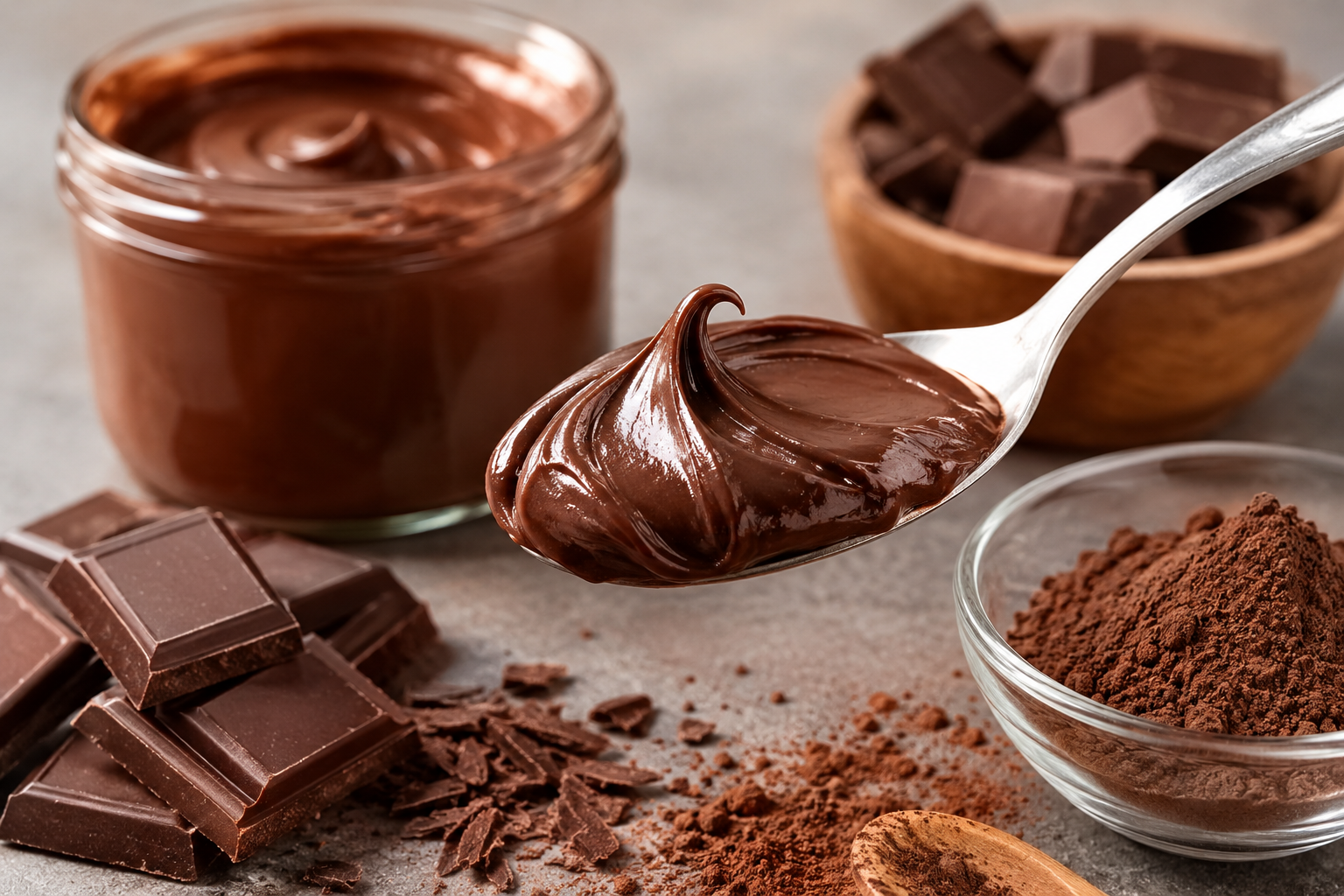
One spoon of chocolate can look like a tiny serving, but its nutrition depends on what kind of chocolate you are talking about.
A spoonful of dark chocolate, cocoa powder, milk chocolate, or chocolate spread can have very different amounts of calories, sugar, and fat.
Even the size of the spoon matters.
A level teaspoon is much smaller than a tablespoon, while a heaped spoon can contain considerably more than either.
So, if you are watching your calories, sugar intake, or fat intake, it helps to know exactly what is sitting on that spoon.
What Does One Spoon of Chocolate Mean?
When someone says “one spoon of chocolate,” they could mean several different things.
It might be a spoonful of chocolate powder added to a drink, a spoon of chocolate spread on toast, or a small amount of melted chocolate used in a dessert.
These products are not nutritionally identical.
For example, unsweetened cocoa powder is relatively low in calories compared with a spoonful of chocolate spread.
Milk chocolate usually contains more sugar, while dark chocolate can contain a higher percentage of cocoa solids and less sugar depending on the product.
Is It a Teaspoon or Tablespoon?
This is one of the easiest details to overlook.
A teaspoon holds around 5 ml, while a tablespoon holds around 15 ml.
That means a tablespoon can contain roughly three times as much product as a teaspoon.
A heaped spoon can contain even more.
If you are counting calories, it is better to check the serving size on the packaging or weigh the chocolate in grams.
The difference between a small level spoon and a generous spoonful can add up quickly when you eat it every day.
The Type of Chocolate Matters
The nutrition of one spoon can change based on the product.
Common options include:
- Dark chocolate: Usually contains a higher percentage of cocoa solids.
- Milk chocolate: Generally sweeter and contains milk ingredients.
- White chocolate: Made mainly from cocoa butter, sugar, and milk ingredients rather than cocoa solids.
- Unsweetened cocoa powder: Usually has no added sugar and is very different from drinking chocolate mixes.
- Chocolate spread: Often contains sugar and added fats, making it more calorie-dense.
- Melted chocolate: Its nutrition depends on the chocolate used before melting.
This is why there is no single calorie or sugar number that applies to every “one spoon of chocolate.”
How Many Calories Are in One Spoon of Chocolate?
The number of calories in one spoon of chocolate depends mainly on the type, amount, and ingredients.
A small spoonful of unsweetened cocoa powder can contain far fewer calories than the same-sized spoon of chocolate spread.
Dark and milk chocolate are more calorie-dense because they contain cocoa solids, cocoa butter, sugar, and sometimes milk ingredients.
A tablespoon of chocolate can easily provide noticeably more calories than a teaspoon simply because you are eating a larger portion.
If you are trying to manage your daily calorie intake, focus on the gram weight rather than the spoon alone.
One Spoon of Chocolate Calories by Type
As a general guide, the calorie content can vary like this:
- Unsweetened cocoa powder: Usually one of the lower-calorie choices by spoonful.
- Dark chocolate: Often calorie-dense because of its cocoa butter and cocoa content.
- Milk chocolate: Similar in calorie density to many dark chocolates, but usually with more sugar.
- White chocolate: Often calorie-dense because of its cocoa butter and sugar.
- Chocolate spread: Can be high in calories because of its combination of sugar and added fats.
The nutrition label is the best place to get the exact number for your particular product.
How Much Sugar Is in One Spoon of Chocolate?
Sugar is where the difference between chocolate products can become especially noticeable.
Milk chocolate and white chocolate generally contain a significant amount of added sugar.
Some chocolate spreads can contain even more.
Dark chocolate tends to have less sugar as the cocoa percentage increases, although this is not always the case.
A 70% dark chocolate, for example, will usually have less sugar than a much sweeter chocolate product.
Is One Spoon of Chocolate High in Sugar?
It depends on what you are eating.
A spoonful of unsweetened cocoa powder contains no added sugar, while a spoonful of sweetened chocolate spread can provide a substantial amount.
This is why the phrase one spoon of chocolate does not tell you enough by itself.
If sugar is something you are trying to limit, check the nutrition label for:
- Total sugars
- Added sugars
- Serving size
- Carbohydrates
- Sugar per 100 g
Also consider what you eat with the chocolate.
A spoonful of chocolate spread on sweetened bread with a sugary drink is very different from a small amount of dark chocolate alongside fresh fruit.
How Much Fat Is in One Spoon of Chocolate?
Chocolate naturally contains fat, mainly because cocoa beans contain cocoa butter.
Dark chocolate can contain a considerable amount of total fat, even when it has less sugar.
Milk chocolate and white chocolate also contain fat from cocoa butter and, depending on the product, milk ingredients.
Chocolate spreads may contain additional oils or other fats.
Is the Fat in Chocolate Something to Worry About?
There is no need to judge chocolate based on fat alone.
The amount you eat matters.
One small serving is very different from eating several large spoonfuls throughout the day.
It is also useful to look beyond total fat and check the saturated fat listed on the nutrition label.
If you enjoy chocolate regularly, keeping the portion modest can make it easier to include it without letting calories and saturated fat climb too high.
One Spoon of Chocolate: Protein, Carbs, and Other Nutrients
Calories, sugar, and fat get most of the attention, but chocolate contains other nutrients too.
Chocolate products can provide carbohydrates and small amounts of protein.
Dark chocolate and cocoa powder can also provide fibre and minerals such as magnesium, copper, iron, and manganese.
The amount varies according to the cocoa content and processing.
Unsweetened cocoa powder is quite different from a sugary chocolate drink mix.
Likewise, a high-cocoa dark chocolate has a different nutritional profile from a sweet milk chocolate bar.
So, when comparing products, look at the full nutrition panel rather than focusing on one number.
Dark Chocolate vs Milk Chocolate vs White Chocolate
Dark Chocolate
Dark chocolate usually contains more cocoa solids than milk chocolate.
As the cocoa percentage rises, the sugar content often falls.
It can also provide more cocoa-derived compounds and minerals than sweeter chocolate varieties.
Still, dark chocolate is not a low-calorie food.
It can be high in fat and calories, so portion size still matters.
Milk Chocolate
Milk chocolate usually combines cocoa solids with sugar and milk ingredients.
It has a smoother, sweeter taste, which makes it easy to eat more than intended.
A small portion can fit into a balanced diet, but checking the sugar and calorie content is useful if you eat it often.
White Chocolate
White chocolate is different because it does not contain cocoa solids in the same way dark and milk chocolate do.
It is mainly made from cocoa butter, sugar, and milk ingredients.
Because of its ingredients, it can be relatively high in sugar, fat, and calories.
One Spoon of Chocolate and Daily Calorie Intake
A small spoonful of chocolate does not automatically ruin a healthy diet.
What matters is how it fits into your overall eating pattern.
For example, you might use a small amount of dark chocolate in yoghurt, add cocoa powder to porridge, or spread a measured amount of chocolate spread on toast.
The bigger issue is when one spoon becomes three or four without you noticing.
Portion size is particularly easy to lose track of when eating chocolate directly from a jar or packet.
Measuring one serving before eating it can make a surprisingly big difference.
Can One Spoon of Chocolate Fit Into a Healthy Diet?
Yes, one spoon of chocolate can fit into a balanced diet, depending on the product and your individual dietary needs.
You do not have to treat chocolate as an all-or-nothing food.
A small serving can satisfy a sweet craving while keeping your overall intake reasonable.
Some simple choices include:
- Choosing a higher-cocoa dark chocolate.
- Using unsweetened cocoa powder in porridge or yoghurt.
- Measuring chocolate spread instead of eating it straight from the jar.
- Checking added sugar on the nutrition label.
- Keeping an eye on the total portion rather than only the ingredients.
- Pairing chocolate with nutrient-rich foods such as fruit, yoghurt, or oats.
When One Spoon May Be More Than You Expect
A “spoonful” can become surprisingly large when it is heaped.
Other things can increase the calories and sugar too.
Watch out for:
- Large or heaped spoonfuls.
- Chocolate syrups.
- Sweetened cocoa mixes.
- Chocolate spreads.
- Chocolate mixed with cream.
- Desserts containing several chocolate ingredients.
- Eating multiple spoonfuls throughout the day.
The spoon itself is not the problem.
The total amount of food you consume is what matters.
How to Measure One Spoon of Chocolate More Accurately
If you are tracking nutrition closely, weighing chocolate is more reliable than using a spoon.
A kitchen scale can tell you exactly how many grams you are eating.
This is especially helpful with chocolate spreads because the amount you put on a spoon can vary significantly.
A level spoon is also easier to estimate than a large, rounded spoonful.
For packaged chocolate, compare your portion with the serving size printed on the label.
If the label says one serving is 20 g, for example, try to measure around 20 g rather than assuming every tablespoon contains the same amount.
What to Check on a Chocolate Nutrition Label
Before deciding whether a particular chocolate works for your diet, look at the full nutrition panel.
Pay attention to:
- Calories: Shows how much energy the serving provides.
- Total fat: Tells you how much fat is present.
- Saturated fat: Useful when monitoring your saturated fat intake.
- Carbohydrates: Includes sugars and other carbohydrates.
- Total sugars: Shows the amount of sugar in the serving.
- Added sugars: Helps identify sugar added during production.
- Protein: Usually present in smaller amounts.
- Fibre: Can vary significantly between cocoa products.
- Serving size: One of the most important numbers to check.
A product may appear low in calories until you realise that its listed serving is much smaller than the spoonful you normally eat.
Simple Ways to Enjoy One Spoon of Chocolate
You can enjoy chocolate without turning every snack into a huge dessert.
Try adding a small amount to foods you already eat.
For example, you can stir cocoa powder into porridge for a richer flavour.
You can add a little dark chocolate to plain yoghurt with berries.
A measured spoon of chocolate spread can work on toast.
You can also add cocoa powder to a homemade smoothie or sprinkle a small amount of chopped dark chocolate over fruit.
These options make the chocolate part of the meal rather than the entire meal.
The main thing is to know what type of chocolate you are using and how much you are actually eating.
When you look at one spoon of chocolate nutrition, the biggest takeaway is simple: calories, sugar, and fat can vary widely depending on the product, serving size, and ingredients.