
Recovering from an injury or orthopedic procedure can be frustrating. Pain makes it difficult to rest comfortably, swelling can restrict movement, and even simple rehabilitation exercises may feel like a challenge. While a traditional ice pack can offer temporary relief, it often warms up quickly, slides out of position, or fails to cover the entire injured area.
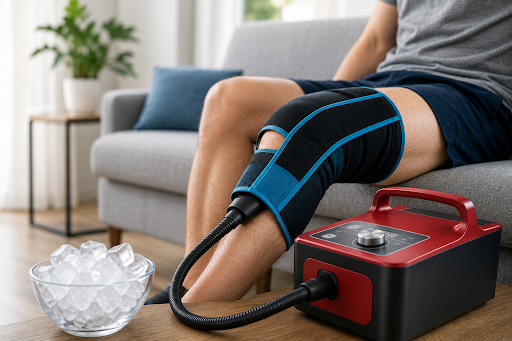
A Game Ready ice machine offers a more controlled approach. Instead of relying on cold therapy alone, the system combines circulating cold water with active compression through a fitted wrap. This allows the injured area to receive consistent cooling and gentle pressure during the same session.
The Game Ready recovery system is commonly used in sports medicine, physical therapy clinics, orthopedic practices, and home recovery programs. It may be recommended following surgery, during rehabilitation, or after certain sports injuries. However, it should always be used as part of a treatment plan created by a qualified healthcare professional.
Game Ready Ice Machine Benefits for Injury Recovery
The main benefit of a Game Ready ice machine is its ability to deliver cold compression therapy in a controlled, targeted way. Cold therapy and compression have both been used for years to manage discomfort and swelling after musculoskeletal injuries and orthopedic procedures. Combining them in one system can make treatment more convenient while providing more complete coverage than a loose bag of ice.
The results will not be identical for every person. The type of injury, severity of swelling, treatment schedule, rehabilitation plan, and overall health can all affect how useful the machine feels. Still, there are several reasons patients and athletes may choose this form of recovery support.
Helps Manage Swelling Around the Injured Area
Swelling is a normal part of the body’s response to an injury or surgical procedure. However, too much swelling can create pressure around the joint, contribute to discomfort, and make movement more difficult.
Cold therapy temporarily lowers the temperature of the treated area, while compression applies controlled pressure around it. Used together, these therapies may help manage edema and post-injury swelling. Research on cold compression therapy has found potential benefits for swelling, pain, movement, and function in certain postoperative settings, although results can vary between procedures and individuals.
Managing swelling may also make it easier to:
- Bend or straighten the affected joint
- Complete approved rehabilitation exercises
- Move more comfortably around the home
- Rest without as much pressure around the injury
- Prepare for a physical therapy session
A Game Ready ice machine does not remove the underlying cause of swelling. It is a recovery tool that may help control symptoms while the body heals.
Provides Temporary Relief From Pain and Soreness
Cold can create a numbing sensation around an injured area, which may temporarily reduce the feeling of pain. This can be helpful during the early stages of injury recovery, after a demanding physical therapy session, or while dealing with post-surgery discomfort.
Some research has found that cryotherapy can reduce postoperative pain in certain settings. Studies involving combined cryotherapy and compression have also reported short-term pain benefits after procedures such as ACL reconstruction. However, the response depends on the procedure, treatment protocol, and individual patient.
The machine is not a replacement for medication or medical treatment. Instead, it may be used alongside other parts of a recovery plan, including:
- Rest
- Prescribed medication
- Physical therapy
- Doctor-approved movement
- Elevation
- Activity modification
By making discomfort more manageable, cold compression therapy may help some patients feel more comfortable between appointments or exercises.
Combines Cold Therapy With Active Compression
A standard cold therapy machine usually circulates chilled water through a pad or wrap. A Game Ready recovery system adds intermittent pneumatic compression, meaning the wrap gently tightens and releases around the treated area.
The Game Ready GRPro 2.1, for example, is designed to integrate active cold with adjustable intermittent compression. Its wraps are shaped for different areas of the body and deliver both therapies at the same time.
Why combining the two therapies can be useful
Cold therapy and compression have different roles during recovery:
- Cold therapy may temporarily reduce pain and help manage swelling.
- Compression therapy provides pressure and support around the injured area.
- Intermittent compression creates a repeated tightening-and-releasing action.
- Circulating water helps maintain more consistent cooling across the wrap.
- Adjustable controls allow treatment to be adapted to medical guidance and comfort.
Because both therapies happen during one session, patients do not need to hold an ice pack in place while also trying to secure a separate compression bandage.
Delivers More Consistent Cooling Than a Loose Ice Pack
Traditional ice packs remain a simple and affordable option, but they have practical limitations. A flat pack may not sit evenly around a curved joint, and a bag of ice can shift whenever the person changes position. It may also become warmer during the session, resulting in uneven cooling.
Game Ready wraps are designed to fit around specific body areas. According to the manufacturer, the wraps provide circumferential coverage while delivering cold and compression at the same time.
Wraps are available for areas such as the:
- Knee
- Shoulder
- Ankle
- Hip and groin
- Back
- Elbow
- Hand and wrist
- Foot
- Lower leg
This fitted design can be particularly useful for the shoulder, hip, or knee, where keeping a regular ice pack in the correct position may be difficult.
May Make Rehabilitation Sessions More Manageable
Pain, stiffness, and swelling can interfere with range of motion. When a joint feels tight or sore, a patient may be less comfortable completing exercises prescribed by a physical therapist.
A Game Ready ice machine may be used before or after rehabilitation, depending on the instructions provided by the healthcare team. Some patients use cold compression therapy after exercise to manage soreness, while others may be advised to use it at a different point in their routine.
Possible uses during physical therapy recovery include:
- Managing soreness after strengthening exercises
- Calming discomfort following range-of-motion work
- Supporting recovery between appointments
- Managing post-activity swelling
- Making rest periods more comfortable
Cold compression does not rebuild strength, restore balance, or correct movement problems on its own. Those improvements come from healing, appropriate exercise, and a structured rehabilitation program. The machine simply supports symptom management along the way.
Offers Hands-Free Convenience During Home Recovery
Holding an ice pack against an injured joint can become tiring, especially when treatment is needed several times during the recovery period. Ice bags may also leak, require frequent refilling, or need to be held in place with towels and bandages.
Once the Game Ready wrap is positioned correctly and connected to the control unit, the system can circulate cold water and apply compression without the user constantly adjusting it. This hands-free setup can be helpful for someone recovering at home with limited mobility.
The unit still requires proper preparation. Ice and water must be added as directed, the correct wrap must be attached, and the treatment settings should follow the recommendations of the surgeon, doctor, or physical therapist.
How a Game Ready Ice Machine Works
The system includes a control unit, a connector hose, and an anatomically shaped wrap. Ice and water are placed inside the unit. Once the machine is turned on, chilled water moves through the wrap while air pressure creates intermittent compression.
A typical setup follows these basic steps:
- Add the recommended amount of ice and water to the control unit.
- Place the correct wrap securely around the injured body part.
- Connect the wrap to the machine using the hose.
- Select the treatment time and compression level advised by the healthcare provider.
- Begin the session and monitor comfort and skin condition.
- Stop the treatment if unusual pain, burning, tingling, or skin changes occur.
Temperature and compression settings can be adjusted on compatible Game Ready systems. Stronger compression or colder treatment is not automatically more effective. The appropriate setting depends on the injury, procedure, skin sensitivity, circulation, and medical instructions.
Injuries and Procedures That May Benefit From Game Ready Therapy
Game Ready therapy is often associated with orthopedic recovery, but its suitability depends on the diagnosis and treatment plan. A healthcare provider may consider it after certain surgeries or injuries when cold and compression are appropriate.
Knee Injuries and Knee Surgery Recovery
The knee is one of the most common areas treated with a cold therapy machine. Swelling around the joint can make bending, straightening, walking, and completing physical therapy exercises uncomfortable.
A Game Ready knee wrap may be used after procedures or injuries such as:
- ACL reconstruction
- Meniscus surgery
- Total or partial knee replacement
- Ligament sprains
- Sports-related knee injuries
- Patellar or tendon procedures
Evidence on compressive cryotherapy following knee surgery suggests that it may offer benefits for swelling, pain during activity, walking ability, and range of motion in some patients. These findings should not be treated as a guarantee for every knee procedure.
Shoulder Injuries and Surgery
The shoulder can be awkward to cover with a standard ice pack because of its rounded shape and wide range of movement. A fitted shoulder wrap may provide more complete contact around the joint.
Cold therapy may be considered after:
- Rotator cuff surgery
- Shoulder replacement
- Labral repair
- Arthroscopic procedures
- Dislocation
- Certain overuse injuries
Research reviews suggest that cryotherapy can help reduce pain after some shoulder procedures, although study results and treatment methods are not completely consistent.
Ankle, Foot, and Lower-Leg Injuries
Ankle sprains often cause swelling around both sides of the joint, making even coverage important. A fitted wrap may be easier to keep in place than a loose bag of ice.
Depending on medical advice, the machine may be used for:
- Ankle sprains
- Tendon injuries
- Foot or ankle surgery
- Lower-leg muscle injuries
- Postoperative swelling
Cold should not be applied directly to unprotected skin, and the skin should be checked during treatment. The American Academy of Orthopaedic Surgeons also advises monitoring the skin when icing an ankle injury.
Hip, Back, and Muscle Recovery
Game Ready wraps are also available for larger or harder-to-reach areas such as the hip, groin, and lower back. These wraps may be used in some post-surgery rehabilitation programs or for doctor-approved management of muscle soreness and soft-tissue injuries.
Athletes may also use cold compression therapy after intense training or competition. That does not mean every case of muscle soreness needs a medical recovery machine. Mild post-workout discomfort often improves with rest and gradual recovery, while severe or persistent pain should be evaluated properly.
Game Ready Ice Machine vs. Traditional Ice Packs
Both options provide cold therapy, but they differ in cost, coverage, compression, and convenience.
Game Ready ice machine
- Combines circulating cold water with active compression
- Uses wraps shaped for particular body parts
- Offers adjustable treatment controls
- Can provide consistent coverage during a session
- May be convenient for repeated use during post-surgery recovery
- Requires a control unit, setup, cleaning, and access to ice and water
Traditional ice packs
- Cost considerably less
- Are widely available
- Require no machine or power source
- Work well for many minor injuries
- May warm up or move out of place
- Do not provide active intermittent compression
- Can be difficult to secure around the shoulder, hip, or other curved areas
A Game Ready ice machine is not automatically necessary for every injury. A basic cold pack may be perfectly suitable for a minor sprain or short recovery period. The better option depends on the diagnosis, expected treatment length, budget, and recommendations from the medical team.
How to Use a Game Ready Ice Machine Safely
Cold compression therapy needs to be used correctly. Excessive cooling or pressure can irritate the skin, increase discomfort, or create problems for people with certain health conditions.
Follow the prescribed treatment schedule
There is no single session length that is right for every patient. Treatment time may vary based on the procedure, injured body part, skin condition, circulation, and instructions from the healthcare provider.
Do not assume that longer sessions will produce faster healing. Use the machine only for the amount of time recommended for your situation.
Check the skin regularly
Pay attention to how the treated area feels and looks. Stop the session and contact a healthcare professional when appropriate if you notice:
- Burning or stinging
- Excessive or lasting numbness
- Unusual skin discoloration
- Blistering
- Increasing pain
- Strong tingling
- Worsening swelling
- Dizziness or general discomfort
A protective barrier may be required between the wrap and the skin, depending on the product instructions and medical guidance.
Use a comfortable compression level
The wrap should feel secure, but it should not cause sharp pain, throbbing, loss of sensation, or a feeling that circulation is being cut off. More pressure is not necessarily better.
People recovering from surgery may be especially sensitive to compression. Follow the level recommended by the surgeon or physical therapist rather than adjusting it based only on personal preference.
Clean and dry the equipment properly
After use, drain and store the control unit according to the manufacturer’s instructions. Allow the wrap and hose components to dry as directed. Regular cleaning can help prevent odors, residue, and avoidable equipment problems.
Who Should Speak With a Doctor Before Using It?
Professional guidance is important for anyone using a medical cold compression system, but it is especially important for people with conditions that affect circulation, skin sensation, or their response to cold.
Speak with a healthcare provider before treatment if you have:
- Poor circulation
- Peripheral vascular disease
- Diabetes-related nerve damage
- Reduced sensation in the treatment area
- A history of blood clots
- Cold sensitivity or cold-related disorders
- Open wounds
- Skin infections
- Significant swelling without a confirmed cause
- Certain heart or vascular conditions
Treatment should also be stopped if the injury has not been properly diagnosed. Severe pain, visible deformity, inability to bear weight, increasing redness, fever, or sudden swelling may require medical evaluation rather than home cold therapy.
Renting or Buying a Game Ready Ice Machine
Buying a Game Ready system can be expensive, especially when it is only needed for a few weeks after surgery. For that reason, many patients explore a Game Ready ice machine rental.
The manufacturer offers a home rental program, and a physician’s prescription is required to rent or buy a unit for home recovery through that program. Availability, insurance billing, and service arrangements may depend on location and provider.
Before choosing between renting and buying, consider:
- How long the recovery is expected to last
- How often the system will be used
- Whether the correct body wrap is included
- Rental delivery and return arrangements
- Cleaning requirements
- Purchase price compared with total rental cost
- Warranty or technical support
- Insurance or reimbursement eligibility
- The healthcare provider’s recommendation
Someone recovering from a single short-term procedure may find renting more practical. Purchasing may make more sense for a rehabilitation clinic, sports organization, or person expecting long-term use under medical supervision.
Getting Better Results From Cold Compression Therapy
A Game Ready ice machine works best when it is used consistently, correctly, and as one part of a broader recovery plan.
Keep these practical habits in mind:
- Position the wrap carefully so it covers the intended treatment area.
- Follow the prescribed temperature, compression level, and session time.
- Place the control unit on a stable surface.
- Keep the hose free from sharp bends or obstructions.
- Check your skin before, during, and after treatment.
- Avoid falling asleep while using the machine unless your healthcare provider has specifically approved it.
- Track changes in pain, swelling, and movement.
- Tell your doctor or physical therapist if symptoms worsen.
- Continue prescribed rehabilitation rather than relying on cold therapy alone.
- Do not return to sports or demanding activity simply because the area temporarily feels numb.
The most useful recovery approach is rarely based on one device. Cold compression therapy may make pain and swelling easier to manage, but healing still depends on the nature of the injury, appropriate medical care, gradual rehabilitation, rest, and safe progression back to normal activity.