
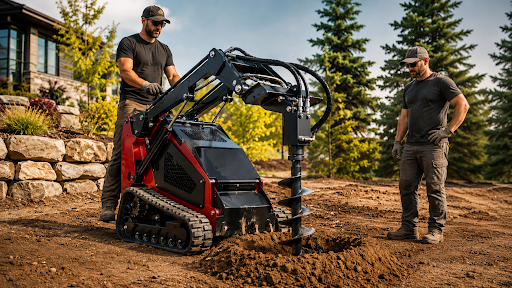
Some outdoor jobs sound simple until the digging begins. Moving a few tonnes of soil, preparing a lawn, drilling fence-post holes, or carrying gravel into a backyard can quickly become exhausting when everything has to be done by hand.
Larger construction equipment can make the work easier, but it is not always suitable for residential properties. A full-sized loader may be too wide for the gate, too heavy for the lawn, or simply unnecessary for a smaller project. This is where a Dingo machine can be especially useful.
Compact, versatile, and compatible with a wide range of attachments, a Dingo machine can handle landscaping, trenching, digging, lifting, grading, and material-moving work in places that larger machines may struggle to reach.
What Is a Dingo Machine and What Is It Used For?
A Dingo machine is a compact utility loader designed to complete digging, lifting, carrying, trenching, and ground-preparation tasks. Depending on the model, the operator may stand on a rear platform or walk behind the machine while controlling it.
Although Dingo is associated with a specific equipment brand, people sometimes use the term “Dingo machine” more broadly when talking about compact mini loaders.
The machine has a small body, hydraulic loader arms, and a mounting system that allows different attachments to be fitted. Instead of hiring separate equipment for every stage of a project, an operator can often change the attachment and continue working with the same machine.
A Dingo machine may be used by:
- Landscapers
- Builders
- Fencing contractors
- Plumbers
- Electricians
- Irrigation installers
- Farmers
- Property maintenance teams
- Homeowners completing larger outdoor projects
Common Dingo machine uses include moving soil, spreading mulch, digging trenches, drilling post holes, grinding stumps, preparing lawns, clearing debris, and carrying construction materials.
Why Dingo Machines Are Popular
The main advantage of a Dingo machine is its ability to work in confined spaces. Many models are narrow enough to enter residential yards through gates and pathways that would be inaccessible to a standard skid steer or larger excavator.
Their compact size can also reduce damage to the surrounding area. While any heavy machine can leave marks on soft ground, a correctly operated mini loader generally causes less disruption than much larger equipment.
Another reason for their popularity is versatility. A single Dingo machine can perform several different jobs when paired with the right attachments. It might begin the day with a bucket for removing soil, switch to an auger for drilling fence-post holes, and finish with a levelling attachment for preparing the ground.
This can save a considerable amount of time compared with completing the same work using shovels, wheelbarrows, and handheld tools.
How Does a Dingo Machine Work?
A Dingo machine uses an engine to power its hydraulic system. That hydraulic power controls the machine’s movement, loader arms, bucket, and compatible attachments.
The basic operating process is straightforward:
- The operator completes a pre-start inspection.
- The required attachment is connected securely.
- The machine is moved into the work area.
- Hydraulic controls are used to raise, lower, tilt, or operate the attachment.
- The material is dug, lifted, carried, or placed where needed.
The exact controls vary between models, but most machines include controls for forward and reverse movement, steering, loader-arm height, bucket angle, throttle, and auxiliary hydraulic functions.
Is a Dingo Machine Easy to Operate?
A Dingo machine can look simple to operate, especially when compared with larger construction machinery. However, becoming comfortable with the controls is not the same as using the machine safely and efficiently.
Ground conditions, slopes, attachments, load weight, and limited turning space can all affect how the machine behaves. An inexperienced operator may also damage lawns, paving, fences, walls, or underground services if the job is rushed.
Anyone hiring a Dingo machine should ask the rental company for operating instructions and read the relevant manual before beginning. It is also worth practising in a clear, level area before working near buildings or obstacles.
Common Dingo Machine Uses
The work a Dingo machine can perform depends largely on the attachment fitted to it. With the right setup, it can support a wide variety of landscaping, construction, and property-maintenance projects.
Landscaping and Garden Preparation
Landscapers commonly use Dingo machines to remove unwanted soil, reshape garden beds, move rocks, spread topsoil, and carry plants or landscaping materials.
The machine can also help with:
- Removing old turf
- Clearing garden waste
- Creating pathways
- Preparing planting areas
- Moving decorative stone
- Distributing compost or mulch
- Reshaping uneven sections of a yard
Because the machine is compact, it may be able to move materials directly from a driveway into a backyard. This reduces the need to carry heavy loads manually in wheelbarrows.
Moving Soil, Gravel, Mulch, and Sand
A standard bucket turns the machine into a compact material handler. It can scoop, lift, transport, and place loose materials such as soil, sand, gravel, mulch, and small demolition debris.
This is particularly helpful when a project involves moving large quantities over a short distance. Even a modest landscaping job can require many wheelbarrow trips, especially when access is narrow or the material is stored far from the work area.
A Dingo machine can reduce physical effort and help keep the project moving at a steady pace.
Digging Trenches
With a trencher attachment, a Dingo machine can create narrow trenches for irrigation, drainage, electrical cables, plumbing pipes, and garden edging.
A mechanical trencher can produce a more consistent channel than hand digging, particularly across compacted ground. It may also reduce the amount of soil that needs to be removed and replaced.
Before trenching, underground electricity, gas, water, drainage, and communication services must be identified. Guessing where services are located can lead to serious injury, costly damage, and project delays.
Digging Fence-Post and Planting Holes
An auger attachment allows the machine to drill holes for fencing, retaining walls, trees, signs, and structural posts.
Augers are available in different diameters, so the correct size should be chosen for the job. Soil conditions also matter. Soft soil may be relatively easy to drill, while dense clay, roots, compacted ground, or rock can slow the work considerably.
An auger can be especially valuable on projects that require many evenly sized holes. It reduces manual digging and helps create a more consistent result.
Yard Levelling and Lawn Preparation
A Dingo machine can be used to remove high spots, fill low areas, spread topsoil, and prepare a surface for turf or grass seed.
Depending on the condition of the site, the operator may use a bucket, levelling bar, rotary hoe, soil cultivator, or grading attachment.
Good lawn preparation involves more than pushing soil around. The surface must have suitable drainage, an even finish, and the correct soil depth. Careful operation is important, as repeatedly driving over the same area can compact the ground.
Stump Grinding
A stump grinder attachment can remove the visible section of an unwanted tree stump by grinding the wood below the surrounding ground level.
This can clear space for a new lawn, pathway, garden bed, or construction work. However, stump grinding is different from removing the entire root system. Large roots may remain underground even after the visible stump has been ground away.
The time required will depend on the stump’s diameter, wood hardness, root structure, and access around the site.
Construction and Site Preparation
Builders and contractors can use compact loaders for site clearing, backfilling, debris removal, material handling, and ground preparation.
Typical tasks include:
- Moving building supplies
- Clearing loose soil
- Removing small amounts of rubble
- Preparing areas for concrete
- Backfilling trenches
- Carrying pavers or timber
- Levelling smaller work sites
- Cleaning up after minor demolition
A Dingo machine will not replace heavy construction equipment on every project, but it can be highly effective where access is limited or the volume of material does not justify a larger machine.
Dingo Machine Attachments and Their Uses
Attachments are what make a Dingo machine so versatile. Choosing the correct attachment can improve productivity and reduce unnecessary strain on the machine.
Standard Bucket
The standard bucket is one of the most commonly used attachments. It is suitable for scooping and carrying soil, sand, gravel, mulch, and loose debris.
Bucket width and design can vary. A general-purpose bucket may suit everyday landscaping, while a larger light-material bucket may be more appropriate for mulch or other low-density materials.
Auger
An auger is used to drill round holes for fence posts, trees, retaining-wall supports, and similar installations.
The auger size should match the required hole diameter. Operators should also consider soil type, required depth, and the possibility of underground utilities before drilling.
Trencher
A trencher attachment cuts a narrow channel into the ground. It is commonly used by landscapers, irrigation installers, electricians, and plumbers.
Trench depth and width depend on the attachment and machine. The operator should avoid forcing the trencher too quickly through hard ground, as this can reduce performance and place unnecessary stress on the equipment.
Stump Grinder
A stump grinder uses a rotating cutting wheel to break the stump into small pieces. It can remove the stump below ground level, allowing the area to be covered with soil or prepared for another use.
Protective equipment and a clear work zone are essential because wood chips, stones, and debris may be thrown during operation.
Soil Cultivator or Rotary Hoe
A soil cultivator breaks up compacted ground, loosens the surface, and mixes soil before planting or turf installation.
It can be useful when renovating old lawns, preparing garden beds, or improving soil that has become hard and difficult to work.
Forks and Material-Handling Attachments
Fork attachments allow the machine to lift and move materials such as pallets, timber, pavers, bags of soil, and construction supplies.
The load must remain within the machine’s rated operating capacity. Long or uneven materials should be balanced carefully and transported with the loader arms kept low.
Levelling and Grading Attachments
Levelling bars, graders, and similar attachments help create a smoother surface for lawns, paths, driveways, and building areas.
These tools are most effective when the operator works gradually rather than trying to correct the entire surface in one pass.
Wheeled vs Tracked Dingo Machines
Dingo machines are commonly available with wheels or tracks. The right choice depends on the surface, access, weather, and type of work being completed.
Wheeled Dingo Machine
Wheeled models can move quickly on firm, level ground. They are often manoeuvrable on concrete, paving, compacted soil, and other stable surfaces.
They may also be easier to transport and suitable for general landscaping work. However, wheels can lose traction in mud, loose soil, or wet conditions.
Tracked Dingo Machine
Tracked models spread the machine’s weight across a larger contact area. This can improve traction and stability on soft, uneven, or muddy ground.
Tracks may also reduce the likelihood of the machine sinking into certain surfaces. However, sharp turns can mark lawns or damage delicate paving, especially when the operator pivots repeatedly in one position.
Which Type Should You Choose?
Consider the following before choosing between a wheeled and tracked Dingo machine:
- Soil and surface conditions
- Slope and ground stability
- Width of the access route
- Sensitivity of lawns or paving
- Required attachments
- Lifting capacity
- Weather conditions
- Availability from the hire company
A rental provider should be able to recommend a suitable model after hearing the details of the project.
Can a Dingo Machine Fit Through a Standard Gate?
Many people hire a Dingo machine because it can reach areas that larger equipment cannot. Even so, not every machine will fit through every gate.
Measure the narrowest point of the access route rather than relying only on the gate opening. Downpipes, air-conditioning units, steps, garden walls, trees, and fence posts can reduce the usable width.
You should check:
- The machine’s overall width
- Attachment width
- Gate and pathway width
- Overhead clearance
- Turning space
- Surface strength
- Steps, slopes, and retaining walls
It is also important to consider how the machine will leave the site after the work is complete. Piles of soil, newly installed fencing, or stored materials can block the return route.
How Much Weight Can a Dingo Machine Lift?
There is no single lifting figure that applies to every Dingo machine. Capacity varies by model, attachment, load position, and operating conditions.
The machine’s rated operating capacity should always be checked before lifting or carrying materials. A load that feels manageable at ground level may affect stability once the loader arms are raised.
Loads should generally be carried low and moved slowly. Uneven ground, sudden turns, slopes, and raised attachments can increase the risk of tipping.
Dingo Machine vs Skid Steer
A Dingo machine and a skid steer can perform some of the same jobs, but they are designed for different working environments.
A standard skid steer is usually larger and may offer greater lifting capacity. It can be a better choice for heavy-duty work, large material volumes, and open construction sites.
A Dingo machine is often more suitable when:
- Access is narrow
- The site is residential
- Ground disturbance needs to be limited
- The project involves several smaller tasks
- Transport space is restricted
- A full-sized loader would be excessive
For backyard landscaping, fencing, and smaller construction jobs, the compact machine may be easier to position and operate.
Dingo Machine vs Mini Excavator
A mini excavator is primarily designed for digging below ground level. Its boom and rotating upper structure make it suitable for trenches, foundations, and deeper excavation work.
A Dingo machine is generally stronger at loading, carrying, grading, drilling, and using a range of front-mounted attachments.
A Dingo machine may be the better option when you need to:
- Move soil or gravel around a site
- Prepare or level a lawn
- Drill multiple post holes
- Carry materials through narrow access
- Switch between several attachments
- Spread mulch or topsoil
A mini excavator may be more appropriate when you need to:
- Dig deep trenches
- Excavate foundations
- Reach over an obstacle
- Remove compacted soil below ground level
- Work with a digging bucket for extended periods
Some projects use both machines. The excavator handles the deeper digging, while the Dingo machine removes spoil, transports materials, and levels the area.
Dingo Machine Hire: What to Know Before Booking
Hiring a Dingo machine is often practical for homeowners and contractors who only need the equipment for a short project.
Before booking, explain the job clearly to the rental company. Include details about access width, ground conditions, material type, required digging depth, site size, and the attachments you expect to use.
Useful questions to ask include:
- Which model is suitable for the project?
- Is the attachment included in the hire cost?
- Are delivery and collection charged separately?
- Is fuel included?
- Is a trailer available?
- How many operating hours are included?
- Are cleaning fees charged?
- What happens if the equipment is damaged?
- Will operating instructions be provided?
You should also ask whether you are expected to clean and refuel the machine before returning it.
How Long Should You Hire a Dingo Machine?
Hire duration depends on the size of the project, operator experience, site preparation, attachment changes, and the amount of material being moved.
Preparing the area before the machine arrives can prevent wasted rental time. Clear the access route, locate underground services, organise waste disposal, open gates, and have materials delivered in advance.
An operator using the machine for the first time may also need more time than an experienced contractor.
Dingo Machine Safety Tips
A compact machine can still cause serious injury or property damage. Safe operation should remain the priority throughout the project.
Complete a Pre-Start Check
Before operating the machine, inspect:
- Fuel and fluid levels
- Hydraulic hoses
- Tyres or tracks
- Attachment connections
- Controls
- Warning labels
- Visible leaks
- Emergency stop functions
Do not continue using the machine if there is a hydraulic leak, damaged attachment connection, or control problem.
Wear Suitable Protective Equipment
Appropriate safety equipment may include sturdy footwear, gloves, eye protection, hearing protection, and close-fitting work clothing. A hard hat may also be required on an active construction site.
Keep the Load Low
Carrying the bucket close to the ground improves stability and gives the operator better visibility. Raising a heavy load while travelling can make the machine less stable.
Use Extra Care on Slopes
Avoid sudden turns, rapid movements, and raised loads on uneven ground. Never assume a compact loader is safe on every slope.
Follow the manufacturer’s operating limits and avoid working where the ground may collapse, slide, or give way.
Check for Underground Services
Underground cables and pipes must be located before using an auger, trencher, bucket, or other digging attachment.
Services can include electricity, gas, water, drainage, telecommunications, and irrigation lines. Damaging them can create a serious hazard and lead to expensive repairs.
Keep Other People Away
Children, pets, and bystanders should remain outside the operating area. Compact loaders have blind spots, and attachments can move suddenly.
The operator should stop work if anyone enters the exclusion zone.
Common Dingo Machine Operating Mistakes
Many problems occur because the machine is rushed, overloaded, or used with the wrong attachment.
Common mistakes include:
- Failing to measure site access
- Carrying loads with the arms raised
- Overloading the bucket
- Turning sharply on lawns or paving
- Ignoring underground services
- Operating too quickly on uneven ground
- Using an unsuitable attachment
- Continuing despite hydraulic leaks
- Changing attachments incorrectly
- Working without proper instruction
These mistakes can damage the equipment, reduce productivity, and create safety risks. Taking a few extra minutes to inspect the site and understand the controls can prevent much larger problems.
Should You Rent or Buy a Dingo Machine?
Renting is usually the more practical choice when the machine is only needed for a one-off project. It removes the responsibility of long-term storage, maintenance, servicing, and repair costs.
Renting may be suitable when:
- You need the machine for a few days
- You want access to different attachments
- Storage space is limited
- You do not want ongoing maintenance costs
- You want to test the equipment before purchasing
Buying may make sense for landscapers, builders, fencing contractors, and other businesses that use compact machinery regularly.
Ownership can provide immediate access to the equipment, but the purchase price is only one part of the cost. Owners must also budget for servicing, hydraulic repairs, tyres or tracks, fuel, insurance, transport, storage, and attachments.
How to Choose the Right Dingo Machine for Your Project
Start by matching the machine to the site rather than simply choosing the largest available model.
Consider:
- Gate and pathway width
- Ground conditions
- Required lifting capacity
- Digging depth
- Attachment compatibility
- Project duration
- Operator experience
- Transport arrangements
- Hire or purchase budget
The attachment is often just as important as the machine itself. A powerful loader with the wrong attachment may be less useful than a smaller model set up correctly for the task.
For landscaping, trenching, fence installation, material handling, and site preparation, a properly selected Dingo machine can reduce manual labour and make difficult areas much easier to access. Careful planning, suitable attachments, and safe operation will have a greater impact on the result than machine size alone.