
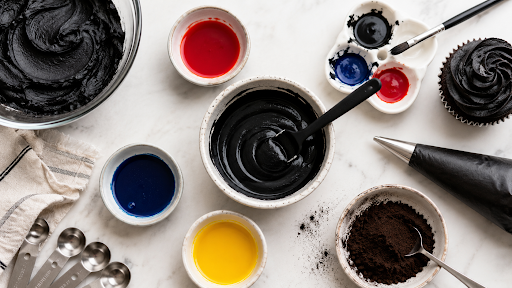
Black is one of those colours that looks simple until you try to make it yourself. Mix the wrong shades, and you may end up with muddy brown, deep purple, dark green, or charcoal grey instead of a rich black.
The good news is that you do not always need ready-made black colouring. You can create it at home by combining colours you may already have. The best method depends on what you are making. Black food colouring for buttercream requires a different approach from black paint, fabric dye, fondant, or craft colouring.
With careful mixing and a little patience, you can create anything from a soft, warm black to a deep, cool-toned shade.
How to Make Black Colouring at Home
The easiest way to make black colouring at home is to mix red, blue, and yellow. Start with equal amounts of all three colours, mix them thoroughly, and then adjust the shade in small steps.
If the mixture looks too brown, add a little more blue. If it appears purple, mix in a small amount of yellow. A green tint usually means the mixture needs a touch of red.
The exact proportions will vary because different paints, food dyes, and pigments have different strengths. One brand of blue may be much stronger than another, so equal measurements should be treated as a starting point rather than a strict rule.
You can also create black by mixing complementary colours. Useful combinations include:
- Blue and orange
- Red and green
- Purple and yellow
- Dark blue and dark brown
- Red, blue, and yellow
Complementary colours reduce each other’s brightness and create a darker, more neutral result. However, some combinations produce warm black, while others lean towards blue, purple, or green.
What Colours Make Black?
Red, blue, and yellow are the most common colours used to make black. When mixed in the right balance, the three primary colours create a dark neutral shade.
For a basic black mixture, try the following method:
- Place equal amounts of red, blue, and yellow in a mixing bowl or on a palette.
- Stir or blend the colours until no individual streaks remain.
- Check the shade in bright, natural light.
- Add tiny amounts of colour to correct the undertone.
- Test the finished mixture before using it on your main project.
If you are working with paint, deep primary colours usually create a stronger result than pale or pastel shades. Dark blue, crimson red, and a rich yellow can produce a more convincing black than light blue, pinkish red, and lemon yellow.
A homemade black may not always look exactly like a commercial jet-black pigment. It may carry a subtle warm or cool undertone, which can be useful for paintings, crafts, cake decorations, and other creative projects.
How to Mix a Warm Black
Warm black has a slightly brown, red, or earthy undertone. It works especially well in natural artwork, wooden textures, autumn decorations, chocolate frosting, and softer colour palettes.
To make a warm black:
- Mix red, blue, and yellow
- Add slightly more red than blue
- Blend in a small amount of dark brown if necessary
- Adjust with blue if the shade becomes too reddish
Use red carefully. Too much can turn the mixture into burgundy or chocolate brown rather than black.
How to Mix a Cool Black
Cool black has a blue, purple, or grey undertone. It suits night scenes, lettering, modern artwork, Halloween decorations, and cool-toned cake designs.
To create it:
- Begin with equal amounts of red, blue, and yellow
- Add a little extra blue
- Mix in a tiny amount of purple for more depth
- Add yellow if the mixture becomes too purple
Avoid pouring in too much blue at once, or the mixture may turn navy.
How to Make Black Food Colouring at Home
Black food colouring can be used for buttercream, royal icing, fondant, cake batter, cookies, macarons, whipped cream, and other desserts.
Gel or paste food colouring usually works better than liquid dye. Gel colouring is more concentrated, so it produces a deeper shade without adding too much moisture to frosting or dough.
One practical homemade combination is red, blue, and green food colouring.
To make it:
- Add equal drops of red, blue, and green food colouring to a small bowl.
- Stir until the colours are completely blended.
- Check whether the mixture appears brown, purple, blue, or green.
- Adjust it one drop at a time.
- Mix it into your icing, fondant, or batter.
The colour may initially look dark grey. Do not rush to add more dye. Black food colouring often becomes deeper after sitting for several hours.
How to Make Black Icing Without a Bitter Taste
One of the biggest problems with black icing is that too much food colouring can leave a bitter or chemical taste. The easiest way to avoid this is to begin with a dark base instead of white frosting.
Good starting bases include:
- Chocolate buttercream
- Dark cocoa frosting
- Black cocoa buttercream
- Melted dark chocolate frosting
- Deep brown icing
Once the frosting is already dark brown, you need much less black gel colouring to turn it black.
After adding the colouring, cover the bowl and let the icing rest. Several hours is helpful, while overnight resting often produces an even deeper shade. If the icing looks very dark grey when freshly mixed, it may become black without needing more dye.
How to Make Black Buttercream
Black buttercream is easier to prepare when you start with chocolate rather than vanilla.
Begin by making chocolate buttercream with regular cocoa powder. Add a small amount of black cocoa powder to deepen the colour, then blend in black gel food colouring.
Beat the buttercream until the shade is smooth and even. Scrape the sides and bottom of the bowl so no pale streaks remain. Cover the bowl and allow the frosting to rest before deciding whether it needs more colouring.
If the buttercream becomes too thick after adding cocoa, mix in a small amount of milk or cream. If it becomes too soft, add a little powdered sugar.
Make all the black buttercream you need in one batch. Recreating exactly the same shade later can be difficult, especially when decorating a large cake.
How to Make Black Royal Icing
Royal icing often dries lighter than it looks when wet, so it needs concentrated colouring. Gel or paste food colour is usually the best choice.
Start with a dark brown base if the flavour and design allow it. Add black colouring gradually and stir slowly to avoid filling the icing with air bubbles.
For more consistent results:
- Prepare slightly more icing than you expect to use
- Let the colour rest before decorating
- Keep the icing covered so it does not dry out
- Test a small amount and allow it to dry
- Adjust the remaining batch after checking the dried colour
This drying test is important because wet royal icing may appear nearly black but dry to dark grey.
How to Make Black Fondant
Turning white fondant black can take a large amount of food colouring. Too much gel may make the fondant sticky, soft, or difficult to shape.
A better option is to begin with chocolate fondant. Add black gel colouring in small amounts and knead until the colour is evenly distributed.
Wear disposable gloves, as dark food colouring can stain your hands. If the fondant becomes sticky, dust the work surface lightly with powdered sugar or cornstarch. Avoid adding too much, as this can make the fondant dry or cracked.
Wrap the fondant tightly and let it rest. The shade will often deepen with time.
How to Make Black Colouring From Natural Ingredients
Natural ingredients can help create dark shades, although they may not always produce a perfect jet black. Most natural options create black-brown, charcoal, purple-black, or deep grey colouring.
Black Cocoa Powder
Black cocoa powder is one of the most useful ingredients for dark cakes, cookies, icing, and buttercream. It creates a deep colour while adding a rich cocoa flavour.
It can be used to:
- Darken chocolate frosting
- Reduce the amount of artificial dye required
- Create dark cookie dough
- Add depth to cake batter
- Make buttercream look closer to black
Black cocoa has a distinctive flavour, so many bakers combine it with regular cocoa powder rather than using it alone.
Food-Grade Activated Charcoal
Food-grade activated charcoal can create an intense black colour in some foods. Only a product specifically labelled for culinary use should be considered.
It should be used cautiously because activated charcoal may interfere with the absorption of certain medications. Anyone taking medication should seek advice from a qualified healthcare professional before consuming foods made with it.
Craft charcoal, barbecue charcoal, and art charcoal must never be used in food.
Squid Ink
Squid ink is a natural option for savoury dishes. It is commonly used in pasta, rice, bread, and seafood sauces to create a dramatic black colour.
Because it has a noticeable salty seafood flavour, squid ink is not suitable for sweet recipes such as cakes, frosting, cookies, or fondant.
Other Dark Ingredients
Several ingredients can help create a naturally dark base:
- Black sesame paste
- Dark cocoa powder
- Strong coffee
- Dark molasses
- Blackberry reduction
- Blueberry reduction
- Culinary vegetable powders
These ingredients may produce dark brown, purple, or grey rather than a neutral black. They are most useful when a softer, natural-looking shade is acceptable.
How to Make Black Paint With Primary Colours
You can make black paint by blending red, blue, and yellow. Place equal amounts of each colour on a palette and mix them thoroughly with a brush or palette knife.
Look closely at the result. If the paint looks brown, add blue. If it looks green, add red. If it looks purple, add a little yellow.
Always adjust the mixture with small amounts. A tiny drop can noticeably change the final shade, especially when using highly pigmented acrylic or oil paint.
Test the black paint on a scrap surface before applying it to your artwork. The colour may look different after drying, and it may also change depending on the background underneath it.
How to Make Black Watercolour Paint
Watercolour artists can create black by mixing dark complementary colours. These mixtures often look more natural and lively than ready-made black paint.
Useful combinations include:
- Ultramarine blue and burnt umber
- Indigo and dark brown
- Crimson and deep green
- Purple and yellow ochre
Use less water for a deep, concentrated black. Adding more water will turn the mixture into a transparent grey wash.
A blue-and-brown combination is especially useful because it can be adjusted easily. Add more blue for a cool black or more brown for a warmer black.
How to Make Black Colour for Crafts
Homemade black colouring can be used in paper crafts, school projects, decorative clay, homemade dough, slime, and painted ornaments.
For craft paint, combine red, blue, and yellow until the shade becomes dark. For dough or modelling clay, knead small amounts of each colour into the material.
To keep the project tidy:
- Cover the table before mixing
- Wear gloves when using strong pigments
- Work in a disposable container
- Add colour gradually
- Test the mixture on spare material
- Keep craft colouring away from food
Craft paint and pigments should never be used in icing, cakes, or anything intended for consumption, even if they are labelled non-toxic.
How to Make Black Colour for Fabric Dyeing
Fabric requires proper textile dye. Food colouring and ordinary craft paint usually do not give permanent, even results on clothing.
You can create a dark fabric dye mixture by combining deep blue, red, and yellow textile dyes. However, the result will depend on several factors:
- The original colour of the fabric
- The type of fibre
- The strength of the dye
- The temperature of the water
- The soaking time
- The amount of fabric being dyed
Cotton, linen, wool, silk, polyester, and blended materials absorb dye differently. Some synthetic fabrics need a dye made specifically for synthetic fibres.
Test the mixture on a small hidden area or scrap of matching fabric before dyeing the entire item. For large clothing projects, commercial black fabric dye usually produces a more reliable and even result.
Why Does Homemade Black Colouring Look Brown or Purple?
An unwanted undertone usually appears because one colour is stronger than the others.
Common causes include:
- Too much red creating brown or burgundy
- Too much blue creating navy
- Too much yellow creating olive green
- Too much red and blue creating purple
- Too much white base creating grey
Lighting can also affect the way black appears. A mixture that looks neutral indoors may reveal a blue, brown, or purple undertone in daylight.
Allow paint to dry and food colouring to rest before making major adjustments.
How to Turn Grey Colouring Into Black
Grey colouring needs more concentrated pigment rather than more liquid or white-based colour.
Depending on the project, you can:
- Add blue and brown to grey paint
- Add black cocoa powder to frosting
- Use gel colouring instead of liquid dye
- Reduce excess water in a paint mixture
- Allow icing to darken overnight
- Build the colour gradually in layers
Do not add large amounts at once. It is much easier to darken the mixture slowly than to correct a colour that has become overly blue, green, or purple.
How to Fix Black Colouring That Looks Brown
Add a tiny amount of blue and mix thoroughly. Blue helps balance warm red and yellow tones.
If the colour still appears brown, add a very small amount of green or purple. Check the shade after every addition.
How to Fix Black Colouring That Looks Purple
Purple usually means the mixture contains too much red and blue. Add a small amount of yellow to neutralise it.
Yellow can change the colour quickly, so use one drop, brush-tip, or pinch at a time.
How to Fix Black Colouring That Looks Green
A green tint usually needs red. Add a small amount, mix completely, and check the shade in natural light.
If the colour becomes brown after adding red, balance it with a touch of blue.
Tips for Making a Deep Black Colour
A rich black shade is easier to achieve when you work slowly and begin with darker ingredients or pigments.
Keep these practical tips in mind:
- Start with a dark brown, blue, purple, or chocolate base
- Choose concentrated gel, paste, powder, or pigment
- Add colour in small amounts
- Mix thoroughly before making adjustments
- Check the shade in natural light
- Let food colouring rest before adding more
- Record the amount of each colour used
- Make enough colouring for the entire project
- Test the shade before applying it
- Avoid adding white unless you want grey
When working on cakes, cookies, or crafts, prepare a little more black colouring than you think you will need. Matching a second batch perfectly can be surprisingly difficult.
Common Mistakes to Avoid When Mixing Black Colour
Adding Too Much Colour Too Quickly
Pouring in a large amount of pigment can create a strong unwanted undertone. Add each colour slowly and mix well before deciding what the shade needs next.
Starting With a Bright White Base
White frosting, fondant, clay, and paint require more pigment to become black. A dark starting base saves colouring and usually creates a richer result.
Judging the Colour Too Soon
Buttercream, royal icing, and fondant often become darker after resting. Paint may also look different when dry. Give the colour time to develop before making another adjustment.
Using the Wrong Product
Liquid food colouring can make icing runny. Craft paint will not dye fabric properly, and fabric dye is not food-safe. Always choose a colouring product designed for the material you are working with.
Expecting Every Mixture to Look Jet Black
Homemade black colouring may have a slight blue, brown, purple, or green undertone. That does not necessarily mean the mixture has failed. A subtle undertone can add depth and may look more natural than a completely flat black.