
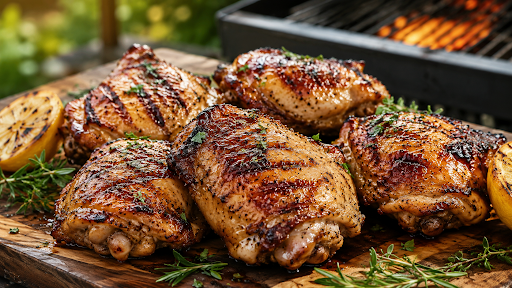
Chicken thighs are one of the easiest cuts of meat to cook on the grill. They have more natural moisture than chicken breasts, handle bold seasonings well, and are less likely to dry out when left over the heat for an extra minute or two.
Even so, timing matters. Leave them on the grill for too little time, and the center may still be undercooked. Grill them for too long over intense heat, and the outside can burn before the meat near the bone is ready.
So, how long do you grill chicken thighs on each side? Boneless, skinless chicken thighs generally need about 5 to 7 minutes per side over medium-high heat. Bone-in, skin-on chicken thighs usually need 5 to 7 minutes over direct heat to brown the skin, followed by another 15 to 25 minutes over indirect heat.
Those times are a useful starting point, but the thickness of the thighs, grill temperature, weather, and type of grill can all affect the actual cooking time.
How Long to Grill Chicken Thighs on Each Side
For boneless chicken thighs, plan on grilling them for approximately 5 to 7 minutes on the first side and another 5 to 7 minutes after flipping. This gives you a total grilling time of around 10 to 14 minutes.
Bone-in chicken thighs take longer because they are thicker, and the meat surrounding the bone heats more slowly. Start them skin-side down over direct heat for about 5 to 7 minutes. Flip and grill the other side for 3 to 5 minutes, then move the thighs to indirect heat. Close the grill lid and continue cooking for another 15 to 25 minutes.
Here is a quick grilling time guide:
- Boneless, skinless chicken thighs: 5 to 7 minutes per side
- Thin boneless thighs: 4 to 5 minutes per side
- Thick boneless thighs: 6 to 8 minutes per side
- Bone-in, skin-on thighs: 8 to 12 minutes over direct heat, followed by 15 to 25 minutes over indirect heat
- Total time for bone-in thighs: Approximately 25 to 35 minutes
Treat these times as estimates rather than strict rules. Two chicken thighs from the same package can have different thicknesses and may not finish cooking at exactly the same moment.
The most reliable way to check grilled chicken thighs is with an instant-read meat thermometer. Poultry should reach a minimum internal temperature of 165°F, according to USDA food-safety guidance. Insert the thermometer into the thickest part of the thigh without touching the bone.
Grilling Time for Boneless Chicken Thighs
Boneless, skinless chicken thighs are ideal when you need a quick grilled dinner. Because the bones have already been removed, the thighs lie relatively flat on the grill and cook more evenly than bone-in pieces.
Preheat the grill to medium-high heat, aiming for approximately 400 to 450°F. While the grill heats, pat the chicken dry with paper towels. Season it with salt, pepper, spices, or your preferred marinade.
Place the thighs directly over the heat, leaving a little space between each piece. Grill the first side for 5 to 7 minutes. Try not to move the chicken during this time. Leaving it in place allows the surface to brown and helps attractive grill marks form.
Flip each thigh and cook the other side for another 5 to 7 minutes. Begin checking thinner pieces early, since they may be ready before the larger thighs.
How to Grill Boneless, Skinless Chicken Thighs
A simple method looks like this:
- Preheat the grill to medium-high heat.
- Clean and lightly oil the grill grates.
- Pat the chicken thighs dry.
- Add the seasoning or drain away excess marinade.
- Grill the first side for 5 to 7 minutes.
- Flip and grill for another 5 to 7 minutes.
- Check the thickest part with a meat thermometer.
- Rest the chicken for 5 minutes before slicing.
Avoid pressing the chicken down with a spatula. It does not make the thighs cook faster, and it can push flavorful juices out of the meat.
You also do not need to flip chicken thighs every minute. One well-timed flip is usually enough. If a thigh sticks to the grill when you try to turn it, give it another minute. Properly browned chicken often releases more easily from clean grill grates.
How to Keep Boneless Chicken Thighs Juicy
Chicken thighs are naturally forgiving, but they can still become dry when cooked over very high heat for too long.
A light coating of oil helps the seasoning stick and encourages browning. Marinades can also add flavor and moisture, especially those made with oil, garlic, herbs, yogurt, citrus, or soy sauce.
For juicy grilled chicken thighs:
- Choose pieces that are similar in size.
- Preheat the grill before adding the chicken.
- Do not use extremely high heat.
- Avoid pressing or constantly moving the meat.
- Check the internal temperature instead of guessing.
- Let the cooked chicken rest before cutting it.
Resting gives the juices time to settle inside the meat. Cutting into the chicken immediately may cause much of that moisture to run onto the plate.
Grilling Time for Bone-In Chicken Thighs
Bone-in chicken thighs need a more patient approach. Cooking them entirely over direct heat can result in burnt skin and undercooked meat near the bone.
The easiest solution is to create two cooking zones. On a gas grill, turn on the burners on one side and keep the other side unlit or set to a much lower temperature. On a charcoal grill, arrange most of the coals on one side.
This setup gives you a hot area for browning and a cooler area for finishing the chicken gently.
How to Grill Bone-In, Skin-On Chicken Thighs
Begin by placing the thighs skin-side down over direct medium heat. Grill them for 5 to 7 minutes, watching for flare-ups caused by dripping fat.
Flip the thighs and cook the second side for 3 to 5 minutes. Once both sides have developed some color, move the chicken to the cooler side of the grill.
Close the lid and cook over indirect heat for another 15 to 25 minutes. Larger pieces may need more time, while smaller thighs may finish earlier.
Check the temperature near the thickest part of the meat. Do not let the tip of the thermometer touch the bone, since this may affect the reading.
Although 165°F is the safe minimum temperature for chicken, thighs can remain moist when cooked somewhat beyond that point. Their connective tissue softens as they continue cooking, which can give the meat a more tender texture. The key is to use moderate heat rather than scorching the outside.
How to Get Crispy Chicken Skin Without Burning It
Crispy skin starts before the chicken reaches the grill. Moisture on the surface creates steam, which makes browning more difficult. Pat the skin thoroughly dry before seasoning.
Keep the grill around medium or medium-high heat. A roaring flame may crisp the skin quickly, but it can also burn the surface while leaving the center unfinished.
A few small changes can make a noticeable difference:
- Place the thighs skin-side down first.
- Start with clean, lightly oiled grill grates.
- Keep the lid nearby in case the fat causes flare-ups.
- Move the thighs to indirect heat once the skin is browned.
- Avoid heavy amounts of oil on the chicken.
- Add sweet sauces near the end of cooking.
Do not panic if flames rise briefly as the fat drips. Move the chicken away from the flame rather than repeatedly flipping it. Constant movement can tear the skin and prevent even browning.
The Best Temperature for Grilling Chicken Thighs
The best grill temperature depends on whether the thighs are boneless or bone-in.
Grill Temperature for Boneless Thighs
Boneless chicken thighs cook well at approximately 400 to 450°F. This medium-high temperature creates a browned exterior while allowing the center to cook in about 10 to 14 minutes.
If the thighs are heavily marinated or coated with a sugary seasoning, stay near the lower end of that range. Sugar can darken and burn quickly over intense heat.
Grill Temperature for Bone-In Thighs
Bone-in chicken thighs are easier to manage at approximately 375 to 400°F. Start them over direct heat to brown the skin, then move them to indirect heat and close the lid.
With the lid closed, the grill works more like an outdoor oven. Heat circulates around the thighs, cooking the thicker meat more evenly.
Keep in mind that built-in grill thermometers measure the air near the lid rather than the exact temperature at the cooking grate. A separate grill thermometer can provide a more accurate reading, but you should still watch how quickly the chicken is browning.
How Long to Grill Chicken Thighs on a Gas Grill
A gas grill offers steady heat and simple temperature control. Preheat it for about 10 to 15 minutes before cooking so the grates are hot enough to brown the chicken.
Boneless thighs usually take 10 to 14 minutes in total on a gas grill. Cook them directly over medium-high heat and turn them once around the halfway point.
Bone-in thighs generally take 25 to 35 minutes. Brown both sides over direct heat, then move the thighs to an area with low heat or no active burner underneath. Close the lid and let the indirect heat finish cooking them.
If your gas grill has several burners, leave one burner off to create a reliable cooler zone.
How Long to Grill Chicken Thighs on a Charcoal Grill
Charcoal gives chicken thighs a deep, smoky flavor, but the heat can be less predictable than a gas grill.
Arrange the hot coals on one side of the grill rather than spreading them evenly across the bottom. This gives you both a direct and indirect cooking area.
Boneless thighs can be grilled over the hot side for approximately 5 to 7 minutes per side. Bone-in thighs should be browned over the coals and then moved to the cooler side to finish cooking with the lid closed.
Charcoal temperatures gradually change as the coals burn, so watch the chicken rather than relying only on the clock. If the outside is darkening too quickly, move the thighs away from the hottest coals.
Direct Heat vs. Indirect Heat
Direct heat means the chicken sits immediately above the flame, burner, or hot coals. This method cooks the surface quickly and is useful for browning, searing, and creating grill marks.
Indirect heat places the chicken beside the primary heat source. It cooks the meat more gently and reduces the risk of burning.
Use direct heat for:
- Boneless chicken thighs
- Thin or evenly flattened pieces
- Browning skin
- Developing grill marks
- Caramelizing sauce during the final minutes
Use indirect heat for:
- Bone-in chicken thighs
- Large or unusually thick pieces
- Skin that is browning too quickly
- Chicken covered with barbecue sauce
- Finishing the center without burning the outside
Many grilled chicken thigh recipes use both methods. Direct heat builds color and flavor, while indirect heat finishes the cooking process.
How to Tell When Grilled Chicken Thighs Are Done
Dark grill marks do not necessarily mean the chicken is fully cooked. The outside may look ready while the center remains undercooked, particularly with bone-in thighs.
An instant-read thermometer is the safest and most accurate tool. Insert it from the side into the thickest portion of the meat. For bone-in thighs, keep the thermometer away from the bone.
The chicken should reach at least 165°F. Check more than one piece, especially when the thighs vary in size.
You can also look for these signs:
- The surface is evenly browned.
- The meat feels firm but not hard.
- The juices are no longer visibly bloody.
- The center does not look raw or glossy.
- Meat on bone-in thighs begins to pull back slightly from the bone.
These visual clues are helpful, but they should not replace a food thermometer. Chicken color can vary even after the meat has reached a safe temperature.
Should You Grill Chicken Thighs With the Lid Open or Closed?
Boneless thighs cook quickly, so they can be grilled with the lid open or closed. Closing the lid may help maintain steady heat, especially in cool or windy weather.
For bone-in chicken thighs, use both approaches. Keep the lid open while browning the skin so you can watch for flare-ups. After moving the thighs to indirect heat, close the lid to help the center cook evenly.
Opening the grill repeatedly releases heat and can increase the cooking time. Once bone-in thighs are over indirect heat, check them occasionally rather than lifting the lid every minute.
When to Flip Chicken Thighs on the Grill
Chicken thighs usually need only one main flip while cooking over direct heat. Place them on the grill and leave them alone until the first side has browned.
The chicken is probably ready to turn when:
- It releases from the grates without force.
- Clear grill marks have developed.
- The edges are beginning to look cooked.
- The surface has changed from pale to golden brown.
Forcing the chicken to flip too early may leave part of it stuck to the grill. Use long-handled tongs instead of a fork so you do not pierce the meat unnecessarily.
Grilling Marinated Chicken Thighs
Marinated chicken thighs are full of flavor, but too much liquid on the surface can interfere with browning. Remove the chicken from the marinade and let the excess drip off before placing it on the grill.
Do not pour marinade that has touched raw chicken over cooked food unless it has first been brought to a safe boil. A simpler option is to reserve a clean portion of the marinade before adding the raw chicken.
Oil-based marinades help prevent sticking, while yogurt marinades can create a tender exterior. Strongly acidic marinades made with large amounts of lemon juice or vinegar should not be left on the chicken for too long, since they may affect the texture.
When to Add Barbecue Sauce
Barbecue sauce usually contains sugar, honey, or molasses. These ingredients caramelize quickly and may burn when exposed to direct heat for the entire cooking time.
Grill the thighs until they are nearly done before adding the sauce. Brush on a thin layer during the final 3 to 5 minutes, flip the chicken, and add another light coating.
Several thin layers create a glossy finish without leaving the outside blackened or sticky. Keep sauced chicken over moderate or indirect heat whenever possible.
Common Mistakes That Affect Grilling Time
Even a reliable cooking-time guide will not help much if the grill is too hot or the chicken pieces are dramatically different in size.
Watch out for these common mistakes:
- Starting with a cold grill: Chicken is more likely to stick and cook unevenly when the grates have not been properly preheated.
- Using extremely high heat: The outside may burn before the thickest part is cooked.
- Crowding the grill: Pieces placed too close together can make heat control more difficult.
- Flipping constantly: Frequent turning prevents the surface from browning properly.
- Adding barbecue sauce too soon: Sugary sauce can burn long before the chicken is ready.
- Cooking every piece for the same time: Thin thighs often finish before thicker ones.
- Relying only on clear juices: Appearance alone cannot confirm a safe internal temperature.
- Skipping the resting time: Cutting the meat immediately allows more juice to escape.
If some pieces finish before the others, remove them individually. There is no need to leave smaller thighs on the grill while waiting for the largest piece to reach the correct temperature.
How Long to Let Grilled Chicken Thighs Rest
Let grilled chicken thighs rest for approximately 5 to 10 minutes before serving. Place them on a clean platter and cover them loosely with foil.
Avoid wrapping skin-on chicken too tightly. Trapped steam can soften the crisp surface you worked to create.
Resting is also a convenient time to finish side dishes, warm buns, prepare salad, or bring everything to the table.
Serving and Storing Grilled Chicken Thighs
Grilled chicken thighs pair well with simple sides such as rice, grilled corn, roasted potatoes, pasta salad, coleslaw, beans, or fresh vegetables. Boneless thighs can also be sliced for tacos, sandwiches, wraps, grain bowls, and salads.
Refrigerate leftover chicken promptly in a shallow, airtight container. USDA guidance recommends using refrigerated leftover poultry within 3 to 4 days.
To reheat boneless chicken thighs, place them in a covered skillet with a small splash of water or broth. Warm them gently to prevent the meat from drying out.
For skin-on thighs, use an oven or air fryer to bring back some of the crisp texture. Reheated leftovers should reach 165°F before serving.