
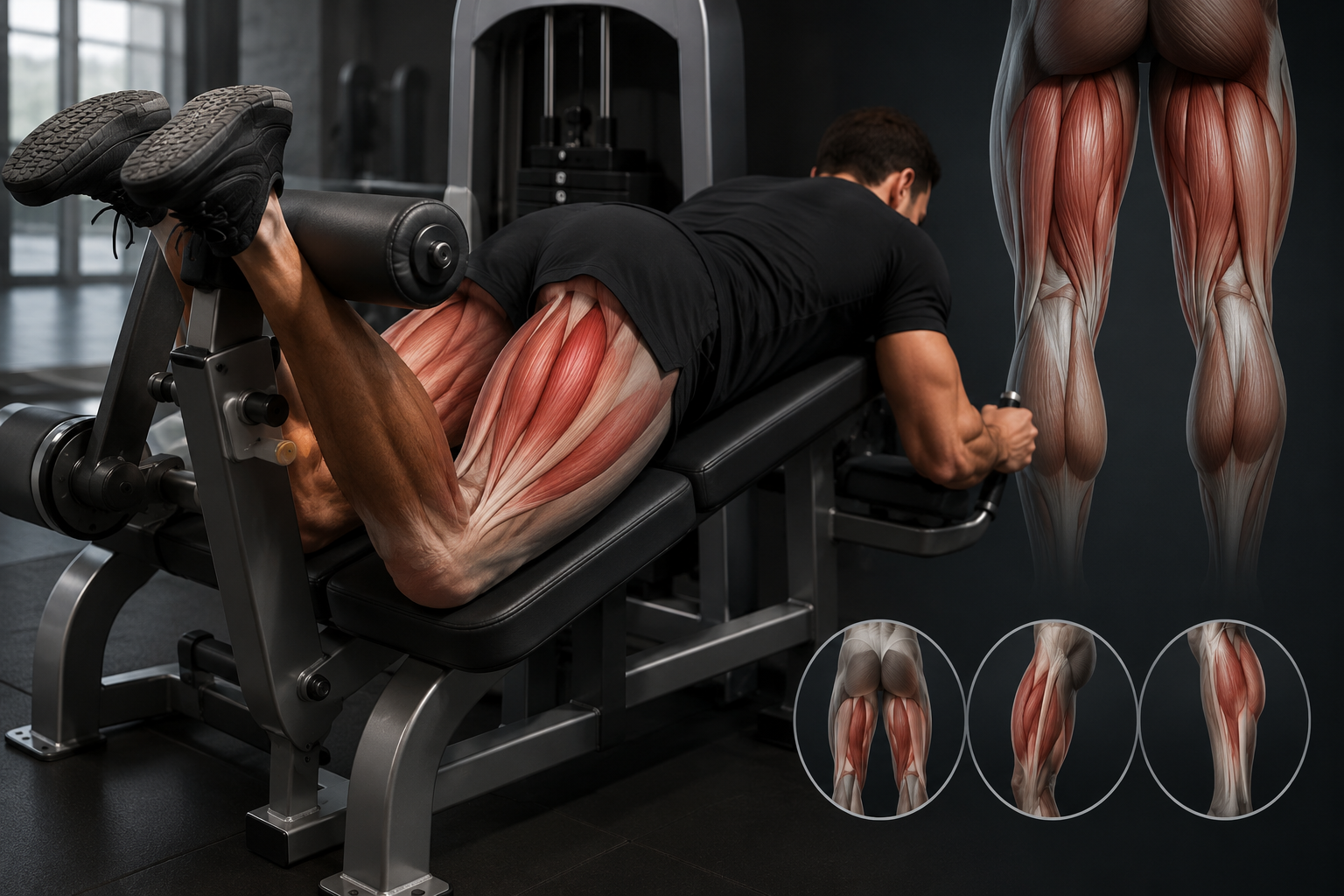
Strong hamstrings do more than make your legs look balanced. They play an important role in walking, running, jumping, lifting, and even protecting your knees during everyday movement. Yet many people focus heavily on squats and leg presses while giving the back of their legs very little direct attention. That’s where the hamstring curl machine comes in.
This machine is designed to isolate the hamstrings, making it easier to strengthen them without relying on several muscle groups at once. Whether you’re new to the gym or have years of training experience, understanding which muscles are involved can help you improve your workouts and get better results. Let’s take a closer look at the muscles worked by the hamstring curl machine and how to get the most from every repetition.
Hamstring Curl Machine Muscles Worked Explained
The hamstring curl machine primarily targets the muscles located at the back of your thighs. These muscles are responsible for bending your knees and assisting with hip movement. Because the exercise focuses on knee flexion, the hamstrings receive most of the workload throughout the movement.
The Hamstrings Are the Primary Muscles
The hamstrings are made up of three separate muscles that work together:
- Biceps femoris
- Semitendinosus
- Semimembranosus
As you curl the weight toward your body, these muscles contract to bend the knee. During the lowering phase, they continue working to control the movement, which helps improve strength and muscle development.
Strong hamstrings contribute to better sprinting speed, improved balance between the front and back of the legs, and greater stability during exercises like squats and deadlifts. Training them regularly can also help reduce muscle imbalances that often develop when the quadriceps receive more attention than the hamstrings.
Supporting Muscles That Assist During the Exercise
Although the hamstrings do most of the work, several supporting muscles help stabilize your body and maintain proper movement.
These include:
- Gastrocnemius (calf muscle): Assists with knee flexion during each repetition.
- Glutes: Help stabilize the hips and pelvis throughout the exercise.
- Core muscles: Keep your body steady and prevent unnecessary movement.
- Lower back stabilizers: Support proper posture while using the machine.
These muscles don’t replace the hamstrings as the primary target, but they contribute to smooth, controlled movement and better overall exercise performance.
How the Hamstring Curl Machine Works
Unlike compound exercises that train multiple muscle groups at once, the hamstring curl machine focuses mainly on one movement pattern. This allows you to place more direct tension on the hamstrings without relying heavily on the hips or lower back.
The Movement Pattern
The exercise is based on knee flexion, which simply means bending your knee.
As you pull the padded lever toward your body, your hamstrings shorten and contract. When you slowly return to the starting position, the muscles lengthen while still controlling the weight. This controlled motion increases muscle activation and encourages steady strength gains over time.
Performing each repetition slowly rather than relying on momentum helps the hamstrings stay under tension for longer, which is beneficial for muscle growth.
Why Isolation Exercises Matter
Isolation exercises often receive less attention than compound lifts, but they serve an important purpose.
The hamstring curl machine allows you to:
- Focus directly on the hamstrings
- Improve muscle symmetry
- Strengthen weak areas
- Enhance the mind-muscle connection
- Complement larger lower-body exercises
Many lifters add isolation work to ensure every major muscle group develops evenly instead of allowing stronger muscles to compensate for weaker ones.
Seated vs. Lying Hamstring Curl Machine
Most gyms offer either a seated or lying hamstring curl machine. Both are effective, but they create slightly different training experiences.
Seated Hamstring Curl Machine
The seated version places your hips in a flexed position, stretching the hamstrings before each repetition begins.
Many trainers appreciate this design because muscles often produce greater force when trained through a longer range of motion. It also feels comfortable for many users and allows consistent control from start to finish.
Lying Hamstring Curl Machine
The lying variation has you face down while curling the weight toward your glutes.
This version has been a gym favorite for years because it’s simple to use and provides a strong contraction at the top of every repetition. Many people find it easy to maintain proper body positioning while performing the exercise.
Which Version Is Better?
Both machines train the hamstrings effectively, so the better choice often depends on your gym and personal preference.
Here’s a quick comparison:
- Muscle activation: Both provide excellent hamstring engagement.
- Comfort: Many people prefer the seated version, while others enjoy the lying position.
- Range of motion: The seated machine often provides a greater stretch.
- Beginner friendliness: Both are easy to learn with proper setup.
- Availability: The lying machine is still more common in many commercial gyms.
Using both variations over time can introduce variety into your workouts and help keep training interesting.
Benefits of Training with a Hamstring Curl Machine
Adding the hamstring curl machine to your leg routine offers more than just muscle growth.
Some of the biggest benefits include:
- Builds stronger hamstrings that support everyday movement and athletic performance.
- Improves lower-body balance by strengthening muscles often overlooked.
- Supports knee stability by helping maintain balanced strength around the joint.
- Enhances athletic performance for activities like sprinting, jumping, and changing direction.
- May reduce injury risk by improving strength in the muscles that protect the knees and hips.
- Creates more balanced leg development, giving the back of the thighs a fuller appearance.
- Complements compound lifts such as squats, lunges, Romanian deadlifts, and leg presses.
Consistent training also improves muscular endurance, making daily activities and sports feel easier over time.
Common Mistakes That Reduce Hamstring Activation
Even a well-designed machine won’t deliver the best results if it’s used incorrectly.
Using Too Much Weight
Choosing a weight that’s too heavy often leads to poor form. Instead of letting the hamstrings do the work, people begin swinging the weight or relying on momentum.
A lighter weight with full control usually produces better muscle activation than lifting heavier with poor technique.
Rushing Through Repetitions
Fast repetitions shorten the amount of time your muscles stay under tension.
Slowing down both the lifting and lowering phases keeps the hamstrings engaged and improves exercise quality.
Lifting the Hips Off the Pad
Your hips should remain firmly against the pad throughout the exercise.
If they lift, tension shifts away from the hamstrings and unnecessary stress may be placed on the lower back.
Not Using the Full Range of Motion
Stopping halfway through each repetition limits muscle engagement.
Moving through a comfortable full range of motion helps the hamstrings contract and stretch properly during every rep.
Poor Machine Setup
Before starting, adjust the machine so the knee joint lines up with the machine’s pivot point and the pad rests comfortably above the ankles.
A proper setup improves comfort, movement quality, and overall effectiveness.
Tips to Feel Your Hamstrings Working More
If you sometimes feel your calves or lower back working harder than your hamstrings, a few small adjustments can make a noticeable difference.
Try these practical tips:
- Adjust the machine before every workout.
- Lift and lower the weight under control.
- Pause briefly at the top of each repetition.
- Keep your hips stable against the pad.
- Focus on squeezing your hamstrings instead of simply moving the weight.
- Avoid swinging or bouncing.
- Use a weight you can control with good form.
Paying attention to technique often leads to better muscle activation than simply increasing resistance.
Who Should Use a Hamstring Curl Machine?
One of the biggest advantages of the hamstring curl machine is that it’s suitable for almost every fitness level.
Beginners
New gym members can safely learn proper hamstring training without the complexity of advanced free-weight exercises.
The guided movement helps build confidence while teaching correct muscle engagement.
Athletes
Athletes rely heavily on strong hamstrings for speed, acceleration, jumping, and quick direction changes.
Including hamstring curls in a training program helps support these movements and balances lower-body strength.
Bodybuilders
For muscle-building goals, isolation exercises are essential.
The hamstring curl machine allows bodybuilders to fully fatigue the hamstrings after compound lifts, contributing to more complete leg development.
People Returning to Training
Individuals coming back after a break often benefit from controlled machine exercises before progressing to heavier free-weight movements.
Because the movement path is fixed, it’s easier to focus on rebuilding strength while maintaining proper technique.
Where the Hamstring Curl Machine Fits into Leg Day
The hamstring curl machine can be placed at different points in your workout depending on your training goals.
Before Compound Exercises
Some lifters perform a few light sets at the beginning of leg day to activate the hamstrings before squats or deadlifts.
This approach can improve muscle awareness and help maintain balanced movement during larger lifts.
After Squats and Deadlifts
Many people prefer using the machine near the end of the workout.
After completing demanding compound exercises, hamstring curls provide focused isolation that helps fully fatigue the muscles without requiring heavy loads.
Sample Leg Day Placement
A balanced lower-body workout might look like this:
- Squats
- Romanian deadlifts
- Leg press
- Hamstring curl machine
- Calf raises
This order allows compound exercises to be performed while energy levels are highest, followed by targeted hamstring work to finish the session with direct muscle stimulation.