
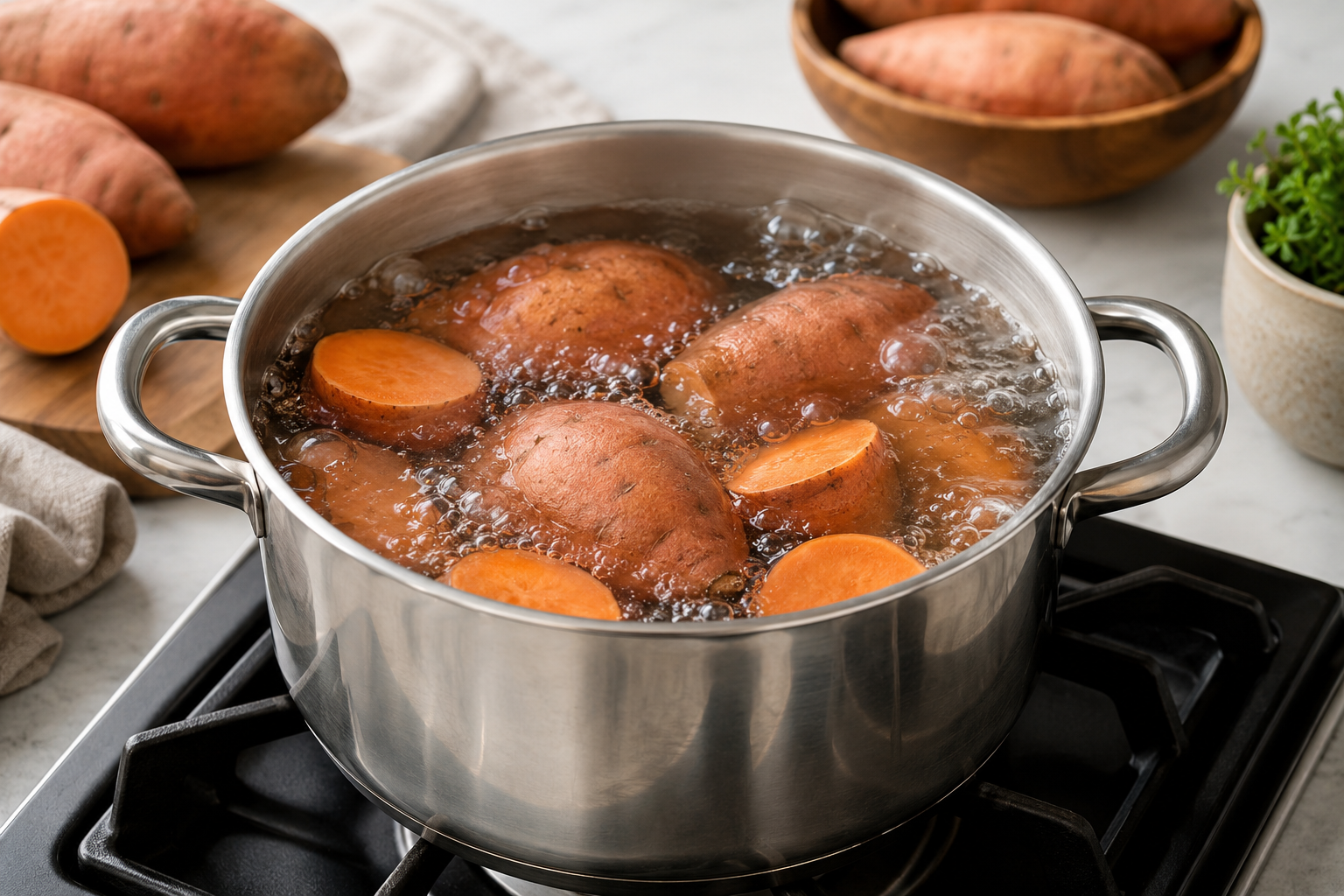
Boiling sweet potatoes on the stove is one of the easiest ways to get them soft, tender, and ready for a variety of meals. But if you have ever ended up with a sweet potato that is still hard in the middle or so soft that it falls apart, you already know that timing matters. So, how long to boil sweet potatoes on the stove?
Generally, whole sweet potatoes can take around 30 to 50 minutes, while peeled and cubed sweet potatoes may become tender in about 12 to 20 minutes. The exact sweet potato cooking time depends mainly on the size, shape, and thickness of the pieces.
How Long Does It Take to Boil Sweet Potatoes?
There isn’t one exact boiling time that works for every sweet potato. A small potato can cook much faster than a large one, and cutting it into cubes can significantly reduce the cooking time.
For the best results, use the timer as a guide rather than treating it as a strict rule. The easiest way to know your boiled sweet potatoes are ready is to test them with a fork.
Whole Sweet Potatoes
Whole sweet potatoes usually take the longest to cook because the heat has to reach all the way through the center.
Small to medium whole sweet potatoes generally need around 30 to 40 minutes, while larger ones may take 40 to 50 minutes or longer.
The shape also matters. A long, thin sweet potato may cook more quickly than a thick, round one of similar weight.
If you’re boiling sweet potatoes whole, keep them at a steady simmer and check the thickest part with a fork. When the fork slides in easily without much resistance, they’re ready.
Cubed Sweet Potatoes
Cubed sweet potatoes are much quicker to boil. When cut into small, evenly sized pieces, they can become tender in roughly 12 to 20 minutes.
This is a convenient option when you’re preparing mashed sweet potatoes or need cooked sweet potato pieces for another recipe.
Try to cut the pieces close to the same size. If some cubes are tiny and others are large, the smaller pieces may become mushy before the larger ones are cooked through.
Halved Sweet Potatoes
Halving sweet potatoes is a useful middle ground. They cook faster than whole potatoes but remain larger and easier to handle than small cubes.
Depending on their size and thickness, halved sweet potatoes can take around 20 to 30 minutes to become tender.
Always test the thickest section rather than assuming they’re done based on the outside. If the fork still meets resistance, give them a little more time.
How to Boil Sweet Potatoes on the Stove
Learning how to boil sweet potatoes doesn’t require complicated equipment or special cooking skills. A pot, water, sweet potatoes, and your stove are enough.
Prepare the Sweet Potatoes
Start by washing the sweet potatoes thoroughly under running water. Scrub away any visible dirt, especially if you’re planning to boil them with the skin.
At this point, you can decide whether to leave the skin on or peel the sweet potatoes. If you’re making mashed sweet potatoes, peeling and cutting them into cubes can make preparation easier.
If you’re keeping them whole, there’s no need to cut them before boiling.
Add Water and Bring It to a Boil
Place the prepared sweet potatoes into a large pot and add enough water to cover them. This helps the pieces cook more evenly.
Turn the stove to medium-high heat and bring the water to a boil. Once the water is bubbling steadily, reduce the heat slightly so it continues at a gentle simmer.
A strong, aggressive boil isn’t necessary. A steady simmer is usually enough to soften the sweet potatoes without causing the pieces to break apart too quickly.
Simmer Until Fork-Tender
This is where the actual cooking time comes into play. Depending on whether your sweet potatoes are whole, halved, or cubed, allow them to simmer for the appropriate amount of time.
Start checking them a few minutes before you expect them to be done. Insert a fork into the thickest section. If it goes through easily, the sweet potato is tender and ready.
If you feel a firm spot in the center, keep cooking and test again after a few minutes.
Drain and Use
Once the sweet potatoes are cooked, carefully drain them in a colander. Let the excess water drain away before serving or using them in another recipe.
For mashed sweet potatoes, letting them drain properly is especially important. Too much leftover water can make the mash thinner than you’d like.
Boiling Time for Sweet Potatoes by Size and Cut
Here’s a quick guide to help you estimate your sweet potato cooking time:
| Sweet Potato Preparation | Approximate Boiling Time |
|---|---|
| Small whole sweet potatoes | 30–35 minutes |
| Medium whole sweet potatoes | 35–40 minutes |
| Large whole sweet potatoes | 40–50+ minutes |
| Halved sweet potatoes | 20–30 minutes |
| Cubed sweet potatoes | 12–20 minutes |
These times are only general estimates. A thick sweet potato may need more time than a thinner one, even if both appear to be the same size.
The fork test is more reliable than the clock when you’re trying to achieve the right texture.
How to Tell When Boiled Sweet Potatoes Are Done
You don’t need to cut open every sweet potato to see if it’s cooked. A simple fork test usually tells you everything you need to know.
The Fork Test
Take a fork and push it into the thickest part of the sweet potato. It should slide in smoothly with very little resistance.
If you have to push hard or the center still feels firm, the sweet potato isn’t ready yet. Continue simmering for a few more minutes and test it again.
For cubed sweet potatoes, test one of the larger pieces to make sure the whole batch is properly cooked.
Check the Center
The outside of a sweet potato can become soft before the middle is fully cooked. This is particularly common with large whole potatoes.
If you’re unsure, insert a knife or fork into the center. The inside should have a consistently soft texture rather than a firm or crunchy spot.
Should You Peel Sweet Potatoes Before Boiling?
Whether you peel sweet potatoes before boiling largely depends on what you’re making.
Boiling Sweet Potatoes With the Skin On
Leaving the skin on can help the sweet potato hold its shape while cooking. It can also save you the extra step of peeling them beforehand.
Once they’re cooked and cool enough to handle, the skin can be removed fairly easily if you don’t want to eat it.
This approach works particularly well when boiling whole sweet potatoes.
Boiling Peeled Sweet Potatoes
Peeled sweet potatoes are convenient when you’re preparing mashed sweet potatoes or another dish where you don’t want the skin.
Cut them into similarly sized chunks before boiling. Even pieces tend to cook at about the same rate, making it easier to get a consistent texture.
What Affects Sweet Potato Boiling Time?
Several small details can change how quickly sweet potatoes become tender.
- Size: Larger sweet potatoes naturally take longer to cook.
- Shape: Thick pieces need more time than thin pieces.
- Cut: Cubes cook much faster than whole potatoes.
- Thickness: Even if pieces have similar lengths, thick pieces can take longer to soften.
- Water temperature: The time needed to reach a boil can affect the overall cooking process.
- Heat level: A gentle simmer cooks the potatoes steadily without being unnecessarily harsh.
- Pot size: A crowded pot may make it harder for the water to circulate around every piece.
Because of these differences, don’t worry if your sweet potatoes take a few minutes longer than the estimated time.
Tips for Perfectly Boiled Sweet Potatoes
A few simple habits can make cooking sweet potatoes on the stove much easier.
- Cut sweet potatoes into similar-sized pieces when you’re not cooking them whole.
- Make sure the water covers the sweet potatoes.
- Avoid overcrowding the pot.
- Keep the heat at a steady simmer after the water boils.
- Start checking for tenderness slightly before the estimated cooking time ends.
- Use the thickest piece for your fork test.
- Drain the potatoes immediately once they’re tender.
- Don’t keep boiling them after they’re fully cooked, especially if you want them to hold their shape.
If you’re making mashed sweet potatoes, you generally want them soft enough to mash smoothly. For salads or side dishes where the pieces need to stay intact, remove them from the water as soon as they’re tender.
Common Mistakes When Boiling Sweet Potatoes
Boiling sweet potatoes sounds simple, but a few common mistakes can affect the final texture.
Cutting Pieces in Different Sizes
If one piece is twice the size of another, they won’t finish cooking at the same time. The smaller pieces can become overly soft while the larger pieces remain firm.
Try to keep the cubes or chunks relatively uniform.
Boiling Them for Too Long
More cooking isn’t always better. Overcooked sweet potatoes can become extremely soft and watery, particularly when they’re cut into small pieces.
As soon as they’re fork-tender, drain them.
Not Testing the Thickest Part
Checking only the outside can be misleading. The exterior may feel soft while the center remains firm.
Always test the thickest part, especially when cooking whole sweet potatoes.
Using Too Much or Too Little Water
The sweet potatoes should have enough water around them to cook properly. At the same time, there’s no need to fill the pot to the top.
Just make sure the potatoes are adequately covered while they’re simmering.
What to Do With Boiled Sweet Potatoes
Once your sweet potatoes are tender, you have plenty of options beyond simply eating them as they are.
You can mash them with butter, milk, salt, and your favorite seasonings for a simple side dish. Cubed boiled sweet potatoes can also be added to salads, breakfast bowls, soups, or meal-prep containers.
For something quick, season the cooked pieces with a little salt, black pepper, cinnamon, or other spices you enjoy.
Boiled sweet potatoes are also useful for recipes that require pre-cooked potatoes. Preparing them ahead of time can make busy weekday meals much easier.
How to Store Boiled Sweet Potatoes
If you have leftover boiled sweet potatoes, let them cool before transferring them to an airtight container.
Keep them refrigerated and use them for upcoming meals rather than leaving them sitting at room temperature for an extended period.
You can store whole pieces or mashed sweet potatoes depending on how you plan to use them. When reheating, use gentle heat so they warm through without becoming unnecessarily soft.
For meal prep, boiling sweet potatoes in advance can save time. You can prepare a batch, portion it into containers, and use it throughout the week in different meals.
Knowing how long to boil sweet potatoes on the stove ultimately comes down to their size, shape, and the texture you’re looking for. Start with the estimated cooking times, then rely on the fork test to know when your sweet potatoes are perfectly tender.