
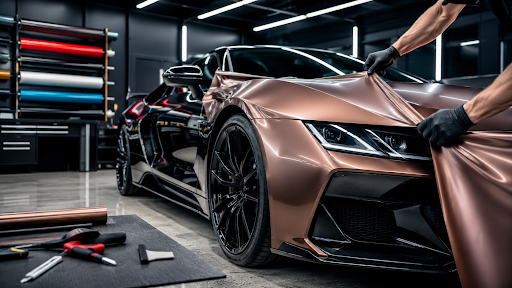
A fresh vinyl wrap can completely change the personality of a luxury or sports car without committing to a permanent paint job. Whether you want a deep satin black finish, a bright custom color, subtle racing stripes, or a full chrome transformation, wrapping gives you plenty of room to make the vehicle your own.
The price, however, is rarely as simple as choosing a color and paying for the vinyl. Luxury and performance vehicles often have sharp body lines, large air vents, spoilers, splitters, sensors, and delicate trim. All of these details make the installation more demanding and can push the total cost above the price of wrapping a standard sedan.
How Much to Wrap a Luxury or Sports Car?
A professional full wrap for a luxury or sports car will generally cost between $4,000 and $10,000, although exotic cars, custom designs, premium films, and complicated installations can exceed that range. Recent industry pricing guides commonly place luxury and sports car wraps toward the upper end of the market, with some exotic vehicle wraps reaching $12,000 or more.
A relatively simple two-door sports coupe with smooth panels may sit closer to the lower end of the range. A supercar with deep vents, carbon-fiber details, a fixed rear wing, and an aggressive body kit will usually cost considerably more.
The final luxury car wrap cost depends on:
- The size and shape of the vehicle
- The type of vinyl selected
- The condition of the existing paint
- The amount of trim that needs to be removed
- Whether you want a full wrap or partial wrap
- The experience of the installer
- Your location and local labor rates
- Any custom graphics or design work
You may find shops offering much lower prices, but a cheap quote deserves a closer look. The cost of wrapping a high-end car includes far more than the vinyl itself. Proper preparation, disassembly, installation, trimming, and finishing can take several days.
Why Luxury and Sports Cars Cost More to Wrap
Wrapping a performance vehicle is often a slower and more technical job than wrapping an ordinary family car. Even when a sports car is physically smaller than a sedan or SUV, its body design may require much more labor.
Complex Body Shapes Take More Time
Sports cars are designed for performance and aerodynamics, not necessarily for easy vinyl installation. Deep curves, recessed areas, sharp panel edges, wide fenders, air intakes, splitters, and sculpted bumpers can make the wrapping process more challenging.
The installer must carefully stretch and position the vinyl without distorting its color or finish. Too much tension can cause the film to lift later, especially around corners and recessed sections. Detailed areas may also require separate pieces of vinyl, precise trimming, or carefully placed seams.
A smooth luxury sedan can sometimes be easier to wrap than a smaller supercar covered in vents and dramatic body lines.
Delicate Parts Require Extra Care
Luxury and sports cars often include expensive trim, cameras, parking sensors, badges, lights, and carbon-fiber components. Door handles, mirrors, spoilers, and other parts may need to be removed so the vinyl can be wrapped neatly around the panel edges.
This disassembly helps create a cleaner finish, but it also increases labor time. An experienced installer will work carefully to avoid damaging clips, wiring, sensors, painted trim, or fragile body pieces.
Some owners prefer not to have certain parts removed. In that case, the installer may need to work around them, which can leave more visible seams or edges.
Average Wrap Cost by Vehicle Type
The following ranges can help you build a rough budget, but they should not replace a quote for your specific vehicle:
- Two-door sports coupe: Around $4,000 to $6,000
- Luxury sedan: Around $4,500 to $7,000
- High-performance convertible: Around $4,500 to $7,500
- Supercar or exotic car: Around $6,000 to $12,000 or more
- Luxury SUV: Around $5,000 to $9,000
- Performance SUV: Around $5,500 to $10,000
These prices can change depending on the market, installer, vinyl brand, and requested finish. Current wrap pricing consistently shows that vehicle size, body complexity, film quality, and installation difficulty are major cost factors.
A compact exotic car is not automatically cheaper to wrap than a large luxury sedan. A fixed wing, wide-body conversion, oversized bumper, or collection of small aerodynamic panels can add hours of detailed work.
How the Vinyl Finish Changes the Price
Not every vinyl wrap material costs the same. The color, texture, brand, and installation requirements can all affect your final sports car wrap cost.
Gloss and Satin Wraps
Gloss vinyl is a popular choice for owners who want the appearance of fresh paint. It is available in a wide selection of colors, from traditional black and white to brighter shades such as orange, green, blue, and red.
Satin wraps sit between gloss and matte. They offer a smooth, low-reflection finish without looking completely flat. Both gloss and satin films are commonly used for full color-change wraps and usually fall within the standard professional pricing range.
Matte Wraps
A matte wrap can give a luxury or sports car a bold, understated appearance. Matte black remains one of the most recognizable choices, but matte gray, military green, dark blue, and other colors are also widely available.
Installation must be handled carefully because overstretched sections, scratches, oily fingerprints, and surface marks may be more noticeable on a matte finish. Matte wraps also require suitable cleaning products and regular care to maintain an even appearance.
Chrome, Color-Shift, and Textured Wraps
Chrome, metallic, iridescent, and color-shifting films usually cost more than standard gloss vinyl. These materials can be less forgiving during installation, particularly around deep curves and recessed body panels.
Textured films that imitate carbon fiber, brushed metal, or forged carbon can also increase the price. They are often used on roofs, hoods, spoilers, mirrors, and interior trim rather than across the entire vehicle.
A full chrome or specialty finish may place the project near the top of the typical price range because both the material and the installation demand more care.
Custom-Printed Wraps
A custom-designed car wrap involves more than choosing a ready-made vinyl color. The process may include concept development, graphic design, measurements, test prints, color matching, printing, lamination, and careful panel alignment.
Custom graphics must line up correctly across doors, bumpers, fenders, and other panels. Detailed designs can add significantly to the overall cost, especially when revisions or complex artwork are required.
Full Wrap vs Partial Wrap Cost
You do not have to cover every painted panel to give your car a new look. A partial wrap can create a noticeable change while keeping the budget more manageable.
Popular partial wrap options include:
- Wrapping the roof in gloss black
- Adding racing stripes
- Wrapping the hood or bonnet
- Covering the mirrors
- Wrapping a spoiler
- Adding side-panel graphics
- Applying a front bumper wrap
- Completing a chrome delete
- Adding carbon-fiber-look accents
A partial wrap costs less overall because it uses less material and usually takes less time. However, small areas are not always cheap on a per-panel basis. Mirrors, bumpers, spoilers, and detailed trim pieces can require considerable labor despite their size.
A chrome delete is another popular choice for luxury vehicles. It involves wrapping window trim, grille accents, badges, or other chrome parts in black or another color. The cost depends on how much trim the vehicle has and how difficult those sections are to access.
Other Factors That Affect Luxury Car Wrap Cost
The condition of the vehicle can change the quote before the installer even opens a roll of vinyl. Wrap film follows the surface underneath it, so dents, scratches, peeling clear coat, rust, and stone chips may remain visible.
Vinyl also needs a stable surface to bond correctly. If the paint is flaking or poorly repaired, the wrap may lift or pull damaged paint away during removal. A professional shop may recommend bodywork or paint correction before starting.
Other possible costs include:
- Removing an old vinyl wrap
- Deep cleaning and surface decontamination
- Repairing scratches, chips, or dents
- Removing and reinstalling badges
- Taking off bumpers, lights, or body panels
- Custom design and printing work
- Wrapping door jambs and inner edges
- Applying a protective coating over the vinyl
- Replacing damaged trim clips
- Paying extra for premium-brand film
Door jambs are worth discussing before accepting a quote. A standard full wrap often covers the visible exterior panels but may not include the painted areas inside the doors. Wrapping those areas requires additional material, disassembly, and labor.
Is a Cheap Wrap Worth the Risk on a High-End Car?
Choosing the lowest quote can be tempting, especially when the difference between installers is several thousand dollars. On a luxury or performance car, though, poor installation can quickly turn into an expensive problem.
Low-quality workmanship may result in:
- Bubbles or trapped dust
- Uneven or poorly positioned seams
- Vinyl lifting around edges
- Visible original paint between panels
- Overstretched or discolored film
- Cut marks in the paint
- Broken trim clips
- Damage to badges, sensors, or carbon-fiber parts
The installer may need to use a sharp blade near the vehicle’s paint, which makes proper training and steady workmanship essential. A reputable shop should also know how to handle the specific trim, electronics, and body construction found on premium cars.
Before booking, look at examples of the shop’s previous work. Ideally, the portfolio should include vehicles with shapes and features similar to yours. A shop that mainly wraps simple commercial vans may not be the best choice for a supercar with complex bodywork.
What to Look for in a Professional Wrap Quote
A professional quote should explain exactly what you are paying for. A single price with no details makes it difficult to compare installers or understand which services are included.
Ask the shop to specify:
- The vinyl brand, product line, color, and finish
- Whether the price covers a full wrap or partial wrap
- Which panels and trim pieces are included
- Whether door jambs and inner edges will be wrapped
- What cleaning and preparation work is included
- Which parts will be removed before installation
- Whether badges will be replaced or reinstalled
- The cost of removing an existing wrap
- The expected installation time
- The workmanship and material warranty
- Any taxes or additional charges
- Recommended cleaning and aftercare methods
You should also ask how the shop handles existing paint damage and what happens if hidden problems are discovered after trim pieces are removed.
The best quote is not necessarily the cheapest one. It is the quote that clearly explains the materials, preparation, coverage, labor, and warranty while giving you confidence that the installer can work safely on your luxury or sports car.