
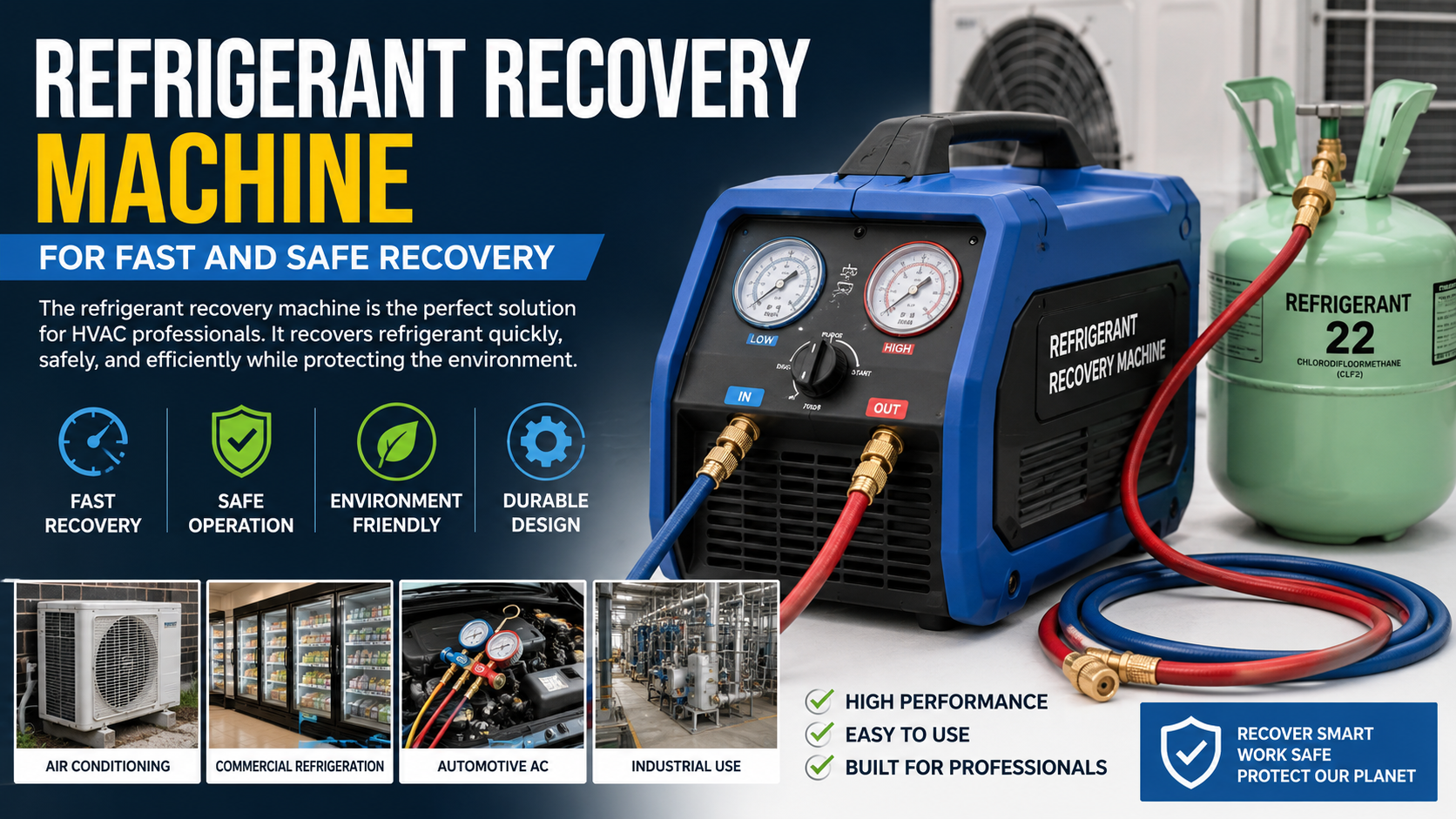
A refrigerant recovery machine is one of the most essential tools for HVAC technicians, refrigeration specialists, and maintenance professionals. Whether you’re repairing an air conditioner, servicing a commercial refrigeration unit, or replacing an old cooling system, recovering refrigerant safely is both a legal and environmental responsibility. Modern recovery machines are designed to remove refrigerants quickly, reduce system downtime, and prevent harmful gases from escaping into the atmosphere.
Choosing the right refrigerant recovery machine not only improves work efficiency but also protects expensive equipment and ensures compliance with environmental regulations. With advancements in HVAC technology, today’s recovery machines are more compact, powerful, and compatible with a wide range of refrigerants.
This guide explains everything you need to know about refrigerant recovery machines, including how they work, their benefits, important features, maintenance tips, and how to select the best model for your needs.
What Is a Refrigerant Recovery Machine?
A refrigerant recovery machine is a specialized HVAC device used to remove refrigerant from air conditioning or refrigeration systems and transfer it into an approved recovery cylinder. Instead of releasing refrigerant into the air, the machine safely captures and stores it for recycling, reclamation, or proper disposal.
Refrigerants such as R-410A, R-134a, R-32, R-404A, and R-22 contain chemicals that can contribute to environmental damage if released improperly. Recovering refrigerant helps reduce emissions while allowing technicians to service cooling equipment safely.
These machines are commonly used during:
- Air conditioner repairs
- Refrigeration maintenance
- Heat pump servicing
- System upgrades
- Compressor replacement
- Leak repairs
- Refrigerant recycling
Without a refrigerant recovery machine, servicing modern HVAC equipment would be unsafe, inefficient, and often illegal in many regions.
How Does a Refrigerant Recovery Machine Work?
A refrigerant recovery machine operates by creating pressure differences that pull refrigerant from an HVAC system into a recovery cylinder.
The basic recovery process includes several simple steps.
Step 1: Connect the Equipment
The recovery machine is connected to the HVAC system using high-pressure hoses. A certified recovery cylinder is also attached.
Step 2: Start the Recovery Process
Once powered on, the machine begins pulling refrigerant from the cooling system.
Step 3: Compress the Refrigerant
The internal compressor moves refrigerant efficiently while separating contaminants and reducing pressure inside the system.
Step 4: Store Refrigerant
Recovered refrigerant flows safely into the recovery cylinder where it can later be recycled or reclaimed.
Step 5: Complete the Service
After refrigerant removal, technicians can safely repair or replace HVAC components before recharging the system.
Modern refrigerant recovery machines are designed to work with multiple refrigerants while maintaining fast recovery speeds.
Benefits of Using a Refrigerant Recovery Machine
Using a refrigerant recovery machine provides several advantages for HVAC professionals and service companies.
Faster Service
High-performance recovery machines remove refrigerant quickly, reducing job completion time and increasing productivity.
Environmental Protection
Recovering refrigerant instead of venting it into the atmosphere helps reduce greenhouse gas emissions and protects the ozone layer.
Improved Safety
Handling refrigerant properly reduces exposure to high-pressure gases and minimizes workplace hazards.
Regulatory Compliance
Many countries require technicians to recover refrigerant before opening refrigeration systems. Using the proper equipment helps maintain compliance with environmental laws.
Cost Savings
Recovered refrigerant can often be recycled or reclaimed, reducing the need to purchase new refrigerant for future servicing.
Better Customer Service
Completing HVAC repairs efficiently improves customer satisfaction while reducing downtime for residential and commercial clients.
Key Features to Look for in a Refrigerant Recovery Machine
Choosing the right refrigerant recovery machine requires understanding the features that affect performance.
High Recovery Speed
Recovery speed is one of the most important factors. Faster machines allow technicians to complete more jobs in less time.
Oil-Free Compressor
Oil-free compressors require less maintenance and provide cleaner refrigerant recovery.
Dual Cylinder Compressor
Many professional machines use dual-cylinder compressors for higher efficiency and faster refrigerant transfer.
Wide Refrigerant Compatibility
Look for machines compatible with refrigerants including:
- R-22
- R-134a
- R-32
- R-410A
- R-404A
- R-407C
- R-1234yf (depending on model)
Automatic Shutoff
Automatic shutoff prevents overfilling recovery cylinders and improves workplace safety.
Lightweight Design
Portable machines are easier to transport between residential and commercial job sites.
Durable Construction
Strong metal frames and protective housings help recovery machines withstand demanding work environments.
Applications of a Refrigerant Recovery Machine
A refrigerant recovery machine is used across multiple industries.
Residential Air Conditioning
HVAC technicians recover refrigerant before replacing compressors, condensers, evaporator coils, or complete air conditioning systems.
Commercial Refrigeration
Restaurants, grocery stores, hotels, and supermarkets rely on recovery machines during refrigeration maintenance.
Industrial Cooling Systems
Manufacturing facilities use recovery equipment for large industrial chillers and process cooling systems.
Automotive Air Conditioning
Vehicle AC service centers recover refrigerant before repairing automotive air conditioning systems.
Heat Pumps
Recovery machines are commonly used when servicing residential and commercial heat pump installations.
Choosing the Right Refrigerant Recovery Machine
Before purchasing a refrigerant recovery machine, consider the following factors.
Type of Work
Residential technicians may prefer lightweight portable machines, while industrial contractors often require high-capacity models.
Refrigerant Compatibility
Choose a machine compatible with the refrigerants you service most frequently.
Recovery Speed
Higher recovery rates reduce labor time and improve productivity.
Build Quality
A durable machine provides better long-term value and lower maintenance costs.
Service Support
Consider manufacturers that provide replacement parts, technical support, and warranty coverage.
Best Practices for Safe Refrigerant Recovery
Safe refrigerant recovery protects technicians, equipment, and the environment.
Follow these recommendations:
- Wear safety glasses and gloves.
- Inspect hoses before every job.
- Use approved recovery cylinders.
- Never mix refrigerant types.
- Keep cylinders upright during recovery.
- Monitor cylinder weight.
- Work in well-ventilated areas.
- Follow manufacturer operating instructions.
- Check for refrigerant leaks after servicing.
Following these practices reduces accidents while improving recovery efficiency.
Common Mistakes to Avoid
Even experienced technicians occasionally make errors during refrigerant recovery.
Mixing Refrigerants
Different refrigerants should never be stored in the same recovery cylinder.
Overfilling Cylinders
Recovery cylinders have maximum fill limits. Overfilling creates serious safety risks.
Ignoring Maintenance
Dirty filters and worn hoses reduce recovery performance.
Using Damaged Equipment
Cracked hoses or faulty gauges can lead to refrigerant leaks and inaccurate pressure readings.
Skipping Leak Checks
Always inspect the system for leaks before recharging refrigerant.
How to Maintain a Refrigerant Recovery Machine
Proper maintenance extends equipment life and improves recovery performance.
Clean After Every Job
Remove dirt and debris from the machine housing.
Inspect Hoses
Replace worn hoses immediately.
Replace Filters
Dirty filters reduce refrigerant flow and recovery speed.
Check Electrical Connections
Inspect power cords and switches regularly.
Store Properly
Keep the machine in a dry location away from moisture and extreme temperatures.
Annual Inspection
Professional servicing helps detect worn components before major failures occur.
Routine maintenance keeps your refrigerant recovery machine operating at peak efficiency.
Signs It’s Time to Replace Your Refrigerant Recovery Machine
Older recovery machines may become less efficient over time.
Consider replacing your machine if you notice:
- Slow refrigerant recovery
- Frequent overheating
- Compressor failure
- Excessive vibration
- Refrigerant leakage
- High repair costs
- Difficulty handling newer refrigerants
Replacing outdated equipment often improves productivity and reduces maintenance expenses.
Frequently Asked Questions
Can one refrigerant recovery machine handle multiple refrigerants?
Yes. Most modern machines are compatible with several refrigerant types, but always verify manufacturer specifications before use.
How long does refrigerant recovery take?
Recovery time depends on refrigerant type, system size, hose length, and machine performance. Small residential systems may take only a few minutes, while large commercial systems require significantly longer.
Is refrigerant recovery required?
Many countries require refrigerant recovery before servicing HVAC equipment to reduce environmental impact and comply with regulations.
How often should a refrigerant recovery machine be serviced?
Routine inspection after every use and professional maintenance at recommended intervals helps maintain reliability.
Can recovered refrigerant be reused?
Recovered refrigerant can often be recycled or reclaimed if it meets quality standards. Contaminated refrigerant should be processed according to local regulations.
Conclusion
A refrigerant recovery machine is an essential investment for HVAC professionals, refrigeration technicians, and service businesses that value safety, efficiency, and environmental responsibility. These machines make it possible to recover refrigerants quickly while protecting valuable cooling systems and reducing harmful emissions.
When selecting a refrigerant recovery machine, focus on recovery speed, refrigerant compatibility, portability, durability, and built-in safety features. Regular maintenance and proper operating procedures will maximize performance and extend equipment life.
Whether you service residential air conditioners, commercial refrigeration units, automotive AC systems, or industrial cooling equipment, using a high-quality refrigerant recovery machine ensures fast, safe, and reliable refrigerant recovery. Investing in the right equipment today helps improve productivity, lowers operating costs, and supports responsible HVAC service practices for years to come.